
In this article I outline the so called “pros” and cons of speculative work and then outline other’s opinions on the debate… If you haven’t already guessed it, I am against spec work. Let me explain – it’s worth the read.

What is “spec work”?
Speculative work (or free pitching) is any job for which the client expects to see examples or a finished piece of design before agreeing to pay a fee or compensation.
The term “crowdsourcing” is sometimes used however this is not spec work, however, some do use this term to cover up the fact that what they are actually offering is spec work. Do not let this vernacular term deceive you.
For clarification I will quote AIGA’s description of spec work:
Speculative work—work done without compensation in the hope of being compensated, for the client’s speculation—takes a number of forms in communication design. There are five general situations in which some designers may work, by choice, without compensation:
- Speculative or “spec” work: work done for free, in hopes of getting paid for it
- Competitions: work done in the hopes of winning a prize—in whatever form that might take
- Volunteer work: work done as a favor or for the experience, without the expectation of being paid
- Internships: a form of volunteer work that involves educational gain
- Pro bono work: volunteer work done “for the public good”
For students and professionals, there may be a different line drawn on which of these constitute unacceptable practices. In each case, however, the designer and client make the decision and must accept the relevant risks. Most designers would consider the first two types to be unacceptable.
In certain design disciplines, such as architecture, advertising and broadcast design, business practices differ and professionals have been expected to participate in speculative work. This usually occurs in fields where the initial design is not the final product, but is followed by extended financial engagement to refine or execute a design. In communications design, this is often not the case. The design submitted “on spec” is all that the client is seeking.
Difference between spec work and crowdsourcing:
Crowdsourcing: “Vote for our new logo, we will use the one you all like the most!” This means the logos have already been designed (and hopefully not via spec).
Spec or Free Pitching: “We need a logo, someone design one for us and we will pick the one we like.”
Spec work is a lose, lose situation. Let me explain why.
What is wrong with spec work?

While a client may feel they don’t want to invest money until seeing some work, designers should not have to prove their worth (do spec) to get a job, though this is the least part of the worry. Instead, clients should choose a designer based on their portfolio and experience and commit to building a working relationship with him or her. Only then will both the client and designer see the best results.
On a side note, talking on behalf of all designers, I would like to say that if a client can’t look at a designer’s style and quality of work (let alone the awards, testimonials or education) and put trust in their services, then they are usually not a client you want to do business with. Developing a working business relationship is all about educating the client and building trust.
An example of spec work: Design Contests
“Design contests” are one of the most common forms of spec and one of the most dangerous. A company will put out a request for a design (eg. a logo design) inviting anyone and everyone to submit work. Often hundreds of designers will submit a design, but only the chosen work, the winner, will be paid… and that is not even guaranteed – even on prepaid contests.
Let me explain the negatives of this situation for both clients and designers.
“Pros” For Clients Using Spec

Before looking at all the negatives of spec work, some claim that there are positive sides to designing on spec. I want to examine the so called “pros” of why consumers (those that need the designs) are attracted to using design contests and suggest reasons why these pros really are not so “pro”.
- “Cheaper” Cost & More Variations
One of the main attractions of using spec work is the so called “cheaper cost” & the fact you get more variations & ideas. The typical scenario goes “Wow, I can get 200 different variations for $500”. On the surface, this may appear cheaper however if you dig deeper you will find that this – in nearly every case – is not so.
Please read on to view the many cons of designing via spec.
Cons For Clients Using Spec

Summarised below are 11 cons for clients designing via spec. These 11 pointers are explained in more depth below this summary.
- Chance Of Plagiarised Work
- Unoriginal Ideas & Designs
- No Protection
- Inferior Quality Designs
- No Research or Development
- Limited or No Revisions
- Unproductive Time Wasting
- The Client is not an Educated Design Professional
- Unethical & Immoral (and possibly Illegal)
- Little Communication & Involvement In The Design Process
- You Build A Negative Relationship Built On Distrust
Client negatives of spec work:
- 1. Chance Of Plagiarised Work
One of the biggest reasons not to use design competitions is the fact that so many of the designs are copied from elsewhere. There have been numerous, numerous reports on theft from elsewhere especially within the logo design industry.
It goes without saying that this can get you into a lot of legal trouble if caught with plagiarised work.
And in some cases, “designers” (evil quotes there) are doing spec work with the intent of suing the company further down the road. I wonder how many people have ever thought about that?
- 2. Unoriginal Ideas & Designs
More often than not, designers who enter these contests are often using template work, which means the work is unoriginal and may have been used for another client. In some cases, it can lead to problems many months down the track such as when a rejected design gets used for another contest. There are also numerous examples of this happening to many unfortunate business owners.
- 3. No Protection
Most professional designers have an agreement or contract that they send to their clients… these contracts protect both the client and the designer while also establishing a trusting, working relationship. In nearly all jobs posted on design contest sites, there is no contract what so ever which leaves the client and designer at much higher risk throughout the whole design process. Who owns the copyright? What are the restrictions for the design? What are the terms and conditions?
- 4. Inferior Quality Designs
Although you can find some great individual talent on design contest sites, the vast majority of the users have little or no knowledge of what “good” design actually is, let alone know how to communicate an intended message for your company. This raises the chance that the final output will be inferior to what could have been achieved by using a professional designer.
This leads me to the next point…
- 5. No Research or Development
Most professional designers will have some form of questionnaire for clients to fill out to ensure that the final design will be reflective of the needs of the business and target market, unlike contest sites.
For an example see either my design brief page or my logo design questionnaire.
Without these vital components, the “designer” is only producing decoration, not solving the problem of what the design should be communicating.
- 6. Limited or No Revisions
Revision rounds are almost non-existent in the context of a contest. Sure, a contest winner could be hired again after being chosen to make a few changes, but in a true client-designer relationship this communication would be constant. The end result would be a collaboration instead of guesswork which also leads me to the next point…
- 7.Unproductive Time Wasting
Designing via contests takes a lot of time… a client will have to spend numerous hours commenting and looking through the submitted designs picking and choosing what the “best” design is which also leads me to the next point.
The number of designers who aren’t making a penny, while entering dozens of contests, is in the tens of thousands, and you just need to look at the astonishing raw numbers for Crowdspring and 99designs to see for yourself. Wasted time, in terms of unpaid designs submitted, is, quite literally, in the hundreds of years. Yes, that’s hundreds. ~ The Naked Truth
- 8.You Are Not an Educated Design Professional
When I say “you”, I mean the client wanting the design. The reason one hires a designer in the first place is due to the fact that they are after a professional looking piece of design – one that they could have not done them self. Alas the person needing the design is more than likely, not a professional.
So, how can a client choose the “best” piece of design if they do not even know the basics of design? The fact of the matter is, clients choose the “best” design based purely on style, nothing more. On top of this fact, do clients even know the technicalities & visual issues of what is being presented?
ie. What is the difference between vector and bitmap generated designs? What is the difference between RGB, Pantone or CMYK colours? What print, bleed & trim settings are needed? etc.
The bottom line here is that most clients are unversed in what is really needed and they should be leaving this to a trained, experienced professional.
- 9. Unethical & Immoral (and possibly Illegal)
Although not directly a con to the client, the fact of the matter is design contests are unethical & immoral. Period.
The very fact that there is only one winner per contest means that the other (usually in the hundreds) designers will get no return for their hard work. To put this into perspective imagine a $500 contest with 100 entries. Second grade maths tells us that each entry is worth $5… that is below minimum wage and to make matters worse, the ‘losers’ will not even receive that $5.
Essentially, design contests are like a lottery to the extent that some even question the legalities of them.
- 10. Little Communication & Involvement In The Design Process
When working with a professional designer you collaborate together throughout the whole design process to achieve the desired outcome. From creating the first initial design brief, right through to the sketches, brainstorming, development, feedback, revisions and delivery.
When designing on spec, all you provide is a short (often less than a paragraph) design brief and then receive the design. There is no involvement… let alone after sale customer support.
- 11. Negative Relationship Built On Distrust
If potential clients are asking one or several designers to show work, they are immediately establishing a negative relationship. Instead of building a long lasting relationship with a single designer, they are often asking several to submit work with little contact between any of them.
If you are still not convinced, read this article for 16 more reasons why to NOT use design contests or read some of SpecWatch ‘s examples of design contests gone wrong.
“Pros” For Designers Doing Spec

The people who are “for” spec work often have these arguments saying why spec work is benefiting the world.
They claim that contest sites provide:
- a world wide access & equal playing field
- a choice of work to choose from
- a chance to gain experience
- a chance to build your portfolio
- a chance to gain a small monetary reward
- a chance to gain more work
- a chance to meet people
But in nearly all cases, you can find this right on your doorstep, without working on spec…
If a designer is wanting to build up their portfolio and do all of the above, all you need to do is approach your local non-profit organisation (or local businesses) and offer them your skills, free of charge.
This will give you experience, allow you to improve your customer relation skills, build up your business network all while giving back to the community and getting exposure for your work. There is also a chance that the organisation will pay you for your work and the work may lead you to more (paid) work too. It’s a win-win for all and certainly not a waste of time – like spec work.
Cons For Designers Doing Spec

Apart from all of the negatives mentioned above, there are numerous more reasons why designers should not participate in spec work.
- It devalues the design industry
- There is a lot of work, with little, to no pay
- There is no copyright or legal protection
- The winning designs are chosen purely by the client’s personal taste
- There is little interaction with the client
- It is very time consuming
Still not convinced? Here are 10 more reasons why not to do spec work .
Grey Area: Volunteering / Pro Bono Work

Volunteering is one area that you could is a ‘grey’ area. Jennifer Bender from AIGA (American Institute of Graphic Arts) answered this question quite well in regards to AIGA using volunteered students for some of their design work. This response can be applied to the topic of volunteering & pro bono work in general.
“AIGA works with designers and firms to create promotional materials including posters, event programs, event web sites, etc. AIGA’s policy is to always provide an honorarium for design projects as compensation . While we realize it is not set at market rates, it recognizes that no design should be expected without compensation. Implementation, such as printing costs, postage and paper, are covered by AIGA and/or an interested sponsor.
The difference between this and speculative work is that our volunteer designers are never required to do work up front for free before a contract or project begins. Each designer knows explicitly beforehand the terms we are able to offer, which is meant as our demonstration that every designer’s work has significant value, knowing that there are both monetary and non-monetary considerations in any project. Designers typically send us a portfolio of their past work, then have the opportunity to review a design brief and accept or decline the project. At that time, a contract is executed with a commitment to an honorarium, after which work on the project begins.”
Official Association’s Views:
AGDA (Australian Graphic Design Association) also have a firm “no-spec” stance on the subject.
As quoted in the AGDA Code Of Ethics :
4.1 Predatory pricing (free pitching)
AGDA discourages members from predatory pricing practices such as free pitching, loss leading and other pricing below break-even. Members should be aware that such practices will damage the economic viability of their business.
and then continues on with:
6.2 Free pitching
AGDA is unequivocally opposed to the unfair manipulation of designers with the aim of garnering unpaid work (commonly known as ‘free pitching’). Client practices which do damage to a member’s business are those that award projects or commissions on the basis of the commissioner’s acceptance of unpaid design submissions (eg. unpaid competitive tendering or speculative work)
AIGA (American Institute of Graphic Arts) also has a firm “no-spec” stance:
AIGA believes that doing speculative work—that is, work done without compensation, for the client’s speculation—seriously compromises the quality of work that clients are entitled to and also violates a tacit, long-standing ethical standard in the communication design profession worldwide. AIGA strongly discourages the practice of requesting that design work be produced and submitted on a speculative basis in order to be considered for acceptance on a project.
The new AIGA President, Debbie Millman has her say on the spec topic:
“I am personally vigorously, passionately and fundamentally AGAINST designers being asked to do work on spec and neither I nor my firm will ever participate in speculative work. I have said it before and I will say it again: Speculative work denigrates both the agencies and the designers that participate. If we give away our work for free, if we give away our talent and our expertise, we give away more than the work. We give away our souls.”
Other’s opinions against spec work:
Many have spoken about their distaste of spec work before, including myself in the articles Why logo design does not cost $5.00 and How NOT to design a logo… below I quote & link to just a few more designers who have spoken out against spec work.
Andrew Hyde
“It is a major ethical flaw of both parties.”
- Spec Work Is Evil / Why I Hate CrowdSpring
- Spec Work Is a Ponzi Scheme
- Spec Work Panel at SXSW
Update 13.8.09: Check out the site WinWithoutPitching, a website dedicated to growing your firm without spec.
Steve from Logo Factory
{with a sarcastic tone} “Keep in mind that not winning any money after dozens of contests only makes designers try harder. That means, they’ll eventually get better at designing. And they’ll enter more contests that they won’t win. Which will get them even more exposure, helpful stars and comments. So, by not paying designers, you’re [clients] actually helping them be better designers. Strange as it seems, paying designers is bad. Makes them lazy.”
- Why you should crowdsource your next logo design
- Design Contests – The Battle Continues
- Are logo design contests even legal?
Graphic Push
“It insults everything about the real-world graphic design industry and the hard-working professionals that make a living building long-term client relationships, crafting deep and varied portfolios, and routinely putting their blood, sweat and tears into their work.”
- 99Designs: Bullshit 2.0
David Airey
“You, as the client, should know that your designer values your business. They’re not providing you with a design based purely on aesthetics, and one that took perhaps 30 minutes to create. They’re looking deep into your business plan, your company mission, your background, your way of dealing with people, and many other aspects of working practices.”
Jeff Fisher
“Those conducting such competitive ventures are not always seeking to take advantage of designers not knowing better. Some simply need to be educated about the design profession and all designers need to take it upon themselves to aid in that education process.”
- When a “contest” is not a contest
GB Studio
“A potential client shouldn’t need to see free work on their own project to determine if a firm is capable of doing the project at hand. That’s what a portfolio is for.”
- Why We Don’t Do Spec Work
Twitter Poll
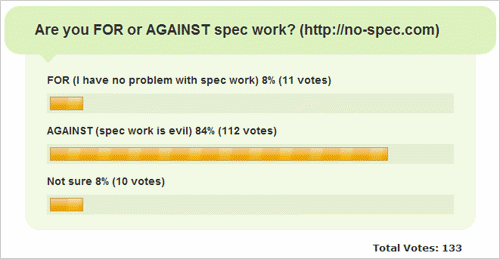
I also held a poll on Twitter (follow me ) about those who support spec work… at the time of writing over 84% agreed that “No, they didn’t support spec work” and a further 8% were unsure of their decision.
Please cast your vote so we can get a more accurate representation. I wonder how many will change their views after reading this article?
My Own Opinion
If you hadn’t already guessed I am on the “spec work is evil” side of the fence although I am not 100% entirely against it – you could say that I am 99% against it… Spec work isn’t right for all designers (especially due to economies of scale) and all situations and I don’t think anyone would argue that, but the market exists and there clearly is a demand for it – but that is not to say that doing spec work is “right” or ethical…
Design contest sites are not the future of graphic design… nor do I see a time when it ever will be, however, in the long term I believe spec work is going to be detrimental to the design industry… both devaluing design and designers as a whole (while making the world an uglier place). And with that said, it’s sad to say that spec work is definitely here to stay. In fact, design contest sites are now now implementing “corporate services” for large studios which obviously are going to be a direct threat to large existing agencies.
Thus, my opinion is to not support spec work and if you’re with me, I encourage you to send this article to whoever you see involving themselves in spec work so they can make an educated decision too.
Summary
I would like to summarise by quoting two views on how to look at spec work one by very “anti-spec” Andrew Hyde and the other by Jeffrey Kalmikoff who holds a neutral view to the subject.
Andrew Hyde:
“Oh, we have years to watch spec work blow up. There of those of use who care about design, and are speaking up and warning off the practice. I see a house of cards being built up, a developer cashing out on it and nobody warning them of the upcoming wind storm.The warnings are now, whether the community comes to respect the ecosystem, respect their neighbors and friends (I’m not talking about just design here) is yet to be known. Part of me wants to continue writing about this, part of me wants to say ‘I did my part’ and get some popcorn.
So what now? See someone using spec (with the community sites like 99 designs or CrowdSpring)? Forward them this post. Or write your own. We all deserve better.”
Jeffrey Kalmikoff:
“The best thing to do for both sides is to get fully educated. Spend some time researching it. Spend some time talking to people on both sides. Read about the extreme examples. Read about the ones that may-or-may-not be spec depending on how you look at it. Get informed and make up your own mind about it. Sure it’s easier to only discuss this topic with people who have the same point of view as you have, but it’s also somewhat useless. Like anything – if you really care about it, take the time to see all the angles. Besides, how’s that old saying go? Keep your friends close:”
What is your opinion?
Do you have any other pros or cons to add? What is your stance on spec work? Has your opinion been changed after reading this article? Please do let us know.
Sources & References
This article has been crafted over many weeks and has been thoroughly researched and referenced. I thank all who have helped in the creation of this post. Below you will find the articles linked and referenced to throughout this article.
- The Spec Work Design Debate at SXSW: Is Spec Work Evil?
- Is Spec Work Evil? The Online Creative Community – SXSWi 2009
- What is spec?
- Is Spec Work Evil?
- Spec Work Panel at SXSW
- Why you should crowdsource your logo
- Why logo design contests do not work
- Spec Work Is Evil and Why I Hate Crowdspring
- Design Contests The battle continues
- The Fine Line Between Laziness and Crowdsourcing
- Just Say No To Spec Work
- How NOT To Design A Logo
- The Real Problem With Design Contests
- Spec Work VS Pro Bono
- Designers: Why Spec Work Is Not Going Away How You Should Respond
- Do you do spec work?
- The Great Spec Work Debate
- We’re Still Debating About Graphic Designers Doing Spec Work, But Why?
- It’s OK To Be Grey
- AIGA’s Position On Spec Work
- Spec work is evil and unethical: no way!
- Insults! Fistfights! Finally a panel debate that smoked! (SXSW day 3)
- Spec Work Analysis: Here To Stay But Not For Everyone
- SXSW – Is Spec Work Evil?
- Ten Reasons Against Spec Work
- President of AIGA, Debbie Millman Against Spec Work
- Spec Work and Crowdsourcing: Gambles that Don’t Pay Off
- Interview with SpecWatch: The Naked Truth of Spec
- 16 steps brief points on free pitching
- 99 Designs, The Evil That Changed Names



I’m against spec because clients cannot even write a decent briefing let alone judge what I propose. Together with my proposal I deliver also the means to judge it.
Excellent article Jacob!
Spec work gets lost in translation!
Designing for purpose has much greater rewards and the trust issues are so much greater working with a client.
We’re all in this for the long term, therefore forging relationships that last is essential.
Spec work is like Housework – it’s Evil!
Cheers
Kev
Amazing post, Jacob.
It’s great to look at both sides of the issue before coming to a final conclusion, something I wish I did a little more in my blog, Spec Work Is Killing The Graphic Design Industry.
Keep up the good stuff,
Carson
Well done! This is certainly a hot topic among many young designers that I know and your article very clearly lays out the reality of it all. I will be emailing this on to quite a few people.
Keep up the awesome work!
*cheers*
Great post Jacob. It’s a iffy situation. Most don’t want to see any spec work (the “nicer” clients) and then you have the ones that would like to see something (through several revisions sometimes) before paying. We just have to find a happy medium place to be in. Want to try to please both but can’t please all.
Paul
Hey Jacob –
Thanks for taking the time to put that together, very appreciated. I will use this as a good logo-designer-hiring-process 101 for my future clients. Expect a link to this from my FAQ page 😀
Keep up the good work 😀
Regards,
– Raja Sandhu
Nice roundup and initial look at the “what spec work is”..
I recently posted an article looking at the issues with Spec Work and the comments got quite interesting, along with discussion with the owners of one of these design contest websites, check it out
http://www.brianyerkes.com/why-crowdspring-owners-should-be-ashamed-of-their-business/
Great undertaking on this topic, Jacob. Nice to see links to all these perspectives living in one place.
Can I add my 16 Brief Points on Free Pitching to the mix? I think you’ll find it adds some new thinking to the discussion, particularly about what designers can do differently.
http://www.winwithoutpitching.com/16points
-Blair Enns
I guess it’s the sign of the times. Seems like everything is made into shortcuts these days, even logo design. I’ve entered a few contests to design posters. Sounds good with promise of payment and exposure but in the end, you lose all together. I guess it’s a designers job to adapt to the current situation and remember that there are people always looking for quality among the shit that’s around:)
Great article! I think spec work is a a lose lose situation for both parties involved. With you design you get what you pay for – end of story.
We tottaly support he no spec work idea
http://vectorvice.com/Blog/2014/10/how-to-decide-if-spec-work-is-the-thing-for-you/
Awesome article mate. Well worth the hours you put in.
Personally, I think spec work has a place so long as prospective clients understand that they will get a tailored and quality product if they pick a dedicated designer.
It’s up to the designer to educate.
The quality of spec work in general is low.
Excellent writeup, which gives a reasonably balanced view of the situation with spec work.
We are often asked to do things on spec, and although we will at times produce a very rough mock-up for established customers, we do not work on spec – we certainly wouldn’t complete a piece of work in the hope of being paid for it.
Oddly enough, some customers do not understand this when it is explained – but never mind. The NO SPEC cause is gaining more momentum these days, which can only help in the process of educating new customers..!
The debate rumbles on.
As i’ve mentioned on another blog in another discussion not too dissimilar to this one, spec work has been around for a while, especially in advertising.
It’s a necessary part of the job: pitching for contracts by creating speculative concepts for potential clients. I’m a little concerned that all spec work will become tarred with the same brush by misinformed inviduals who read certain blogs and jump on the bandwagon.
I’m certainly not at all advocating design contests, plagiarism and the like. This is an area that will always exist as long as there are people out there looking to exploit. But that last time I looked this form of spec work is certainly not killing our industry. What’s harming the industry at the moment is the current economic climate, which in turn is having a massive impact on advertising and marketing budgets across the globe.
If anything, the sort of spec work being campaigned against here serves to highlight the stronger individuals in our field. Company’s that appreciate the value of good design will always pay a good designer/agency a worthy price for their work. This will never change.
Really excellent and long, long article, but any way you have too many references here that it worth it, in my opinion, I am against for some reasons about the design profession, as David Airey and Jeff Fisher. A client shouldn’t try to get a logo for 0$ because a good logo is more expensive, is not just the logo itself, is the research, the sketching the whole process and developement behind it which is made by professional designers to egt a professional good logo.
But I think that the kind of contest sites, are more like for students looking for some “real” experience, or a designer in a really really bad moment, I don’t know, because a true professional designer won’t be there, he knows the field and the history behind that kind of spec work.
But for someone starting, no clients, not real experience, no portfolio , “more than school projects” can make a try and that’s all, when I say that I mean: get in some contest, try to do your best, and time after leave it, becasue you are not gonna go really far that way.
I even have a few friends, graphic designers that take this kind of design contest just for fun, they try to get better and that is a good way for they to do it, but I know they are leaving it because they already made a good portfolio and they starting to get real and valuable clients, based on the work they did on this kind of sites. I this case they just use it, and leave it as soon as they could.
When you were starting, never thought about participate on design contest?
Spot on Jacob, and nice work for putting together such a comprehensive look on the topic!
I agree with you, I don’t think Spec Work is the future of freelance design but it’s here to stay, at least for a few years.
While I don’t believe that it’s evil, I certainly don’t support it. Clients/designers have the right to make up their own mind whether they want to partake in this. I wouldn’t touch it with a 10′ pole, but I don’t feel I have the right to tell someone else they can’t (as long as they aren’t breaking laws).
I think about the type of clients that would be attracted to this type of design, and quite honestly I wonder if I’d want to work with them anyway – they are bottom-feeders and bargain-hunters.
In terms of convincing designers to be for or against spec work, I think that a healthy, civil exchange of ideas is fine, but I’ve seen both sides post inflammatory, disrespectful remarks – that’s no good.
Personally I see the future of graphic design combining with other skill sets like web design, marketing and selling. Over the past few months I’ve kept a pulse on what employers are looking for and the traditional graphic design positions are often being replaced with Graphic Designer + some other skill set.
Anyway just my 2 cents, thx for including me in the conversation.
jeremy
beingastarvingartistsucks
Good job Jacob, you’ve compiled a thorough and conclusive report. I would like to put a link to this article on my site. If its OK with you. Cheers
Thank you for posting such an informative article. I’m still a student studying graphic design, not really sure how client – designer relationship works. When a client comes to you with a brief, are they required to sign some sort of contract before you begin concept work for them?
Jacob,
Thanks for such a well researched piece. As a graphic designer, I completely agree that spec work is damaging to the industry. I see that many clients still need to be educated about this and informed on why it is not good practice. I think sites such as Odesk and Elance are adding to the practice of speck work, because many clients looking for cheap work go on there and then request “trial periods” or “tests” from graphic designers. New designers that are anxious to get their first real clients are falling for this practice.
I posted an article about spec work on my blog as well and will add your link to my article!
Charlie,
Yes it is our role to educate, but just because a client knows that they can get a better design elsewhere doesn’t mean spec work “has a place” in my opinion.
Matt,
I suppose with established customers it could work, though eventually this could back fire on you, like what happened to Steve from Eighty One Design. And yes, it is good to see the no spec cause gaining momentum.
Kev,
Well said.
Carson,
Thanks for the link to your article… would be interested to know your opinions now after reading this article? Has anything changed?
Abbas,
I do not necessarily agree that it is “necessary part of the job” to pitch for contracts. It is certainly not needed and many successful freelancers and studios do so without it and I think are much better off for doing so. A website that gives advice about winning without pitching is: http://www.winwithoutpitching.com if interested.
Luis,
I am not sure if I correctly interpreted your first paragraph, are you saying you are against David and Jeff’s opinions?
In regards to students looking for real experience, they can do this like in my example by going to local businesses or doing charity work.
For those in a “really bad moment”, this is probably due to their quality of work not being up to standard. If they go about doing design contests, they will most probably end up losing, which is just going to get them into a bigger hole. My argument is that they can get this real world experience from real clients, not via spec. Wouldn’t you agree?
And when I started I admit I did enter a few design contests but these were for my local government and for a good cause. It was to raise awareness for the effects of drugs and alcohol on teenagers. And this was before I knew anything about spec or had an education in design. In the end it comes down to personal choice, though I wish I had known about spec before engaging in it.
Paul,
You may find this website quite handy: http://www.winwithoutpitching.com
Jeremy,
Personally, I don’t think spec will ever go away, in fact it is on the rise. And I agree with you about each having their own choice, though are all people making educated decisions? I don’t believe so and that is the problem. And like you touched on, spec posts should not be about “convincing designers” but rather, educating them – letting them decide. I tried to do this in this article, though I must admit, it did have a slight bias. However, in saying that, I believe after all is weighed in, the pros definitely outweigh the cons for both the client and designer in nearly all situations. From here? It’s up to the individual to decide.
Raja,
No worries, I enjoyed putting it together.
Brian,
Thanks for the link, looks like a rather heated debate… as like any spec work post, except strangely this one.
Blair,
Of course you can add it… silly of me not to post it as I had read it just a week earlier. I’ve also added your link to win without pitching.
Kiren,
The hard part is finding the people looking… good luck with it.
Zach,
Yes, when I was reading through all the spec work posts, it seemed that there was no clear distinction… and spec sites actually use this vernacular term to their advantage. I think you have it summed up well with the whole “benefiting everyone” way of thinking and is certainly something to consider.
Swati K,
I suppose that every industry is facing different challenges as it moves through the information age, but it is those that stand up for what is right or ethical that really make a difference. In regards to your idea, I can see quite a few flaws in it and essentially it still leaves designers working for no guaranteed payment if I have interpreted what you have said correctly.
Harpabhjot,
Of course, please feel free.
Mish,
Personally I use a contract for my larger jobs and take a 50% deposit. For smaller jobs I do not tend to worry but I still recommend it as it covers you both in case any problems arise.
Steve,
Thanks for linking the article, just had a read of it… I don’t think you were being arrogant, just acting on instinct. It’s certainly a point to consider but I still stand on my anti spec podium.
Larissa
Thank you for the link out from the article and for educating the masses about the damage of spec work.
I’m glad that you brought up the difference between crowdsourcing and spec work. It seems that since so many design contest sites have built up a spec work driven crowdsourcing, that there is often no longer a distinction.
Crowdsourcing has its place, but it seems that entrepreneurs of this niche try to make it the exclusive business model of anyone trying to commission graphic design work.
When I’ve talked about spec work in the past, I’ve given the example of “I can build a shed, but that does not make me an architect”. This is one of the most frustrating parts of spec work — when it tries to convince companies that a single professional can be made obsolete by a group of hobbyists.
It’s interesting to see the number of ways in which crowdsourcing has been done successfully. In most cases, it’s the result of people with spare time doing something they enjoy (Contributing to an article on Wikipedia for example.)
I believe that in it’s purest form, crowdsourcing shouldn’t immediately benefit only one party. Going back to the Wikipedia example, even though the crowdsourcing is “work” done for free, it’s still benefiting everyone.
In the typical design contest, the work only benefits a single person/company. The efforts make no difference to anyone else. This isn’t to say that people should only participate for the “greater good” all of the time, but it is something to consider.
HI Jacob, Brilliant post!
While I am guilty of being a one-time participant (as a designer) of contest design, after reading a couple articles on spec-work, I am quite against it.
However, I somehow can’t help asking how different are we from any other industry? Take the entertainment industry for example and their fight against piracy. Or the issues facing sites like Napster and Pirate Bay. Its illegal and there are bodies working on its eradication.
Sadly for us, the design industry has not yet received the kind of recognition with the mass, that has been earned by our fellow artistes in say music or movie business. But looking at how badly Spec-work is affecting our trade and culture, i wonder if we can use the very idea to educate both the client and designer of these sites.
Would it be possible to have a governing body, for eg. AIGA, to approve these sites. There could be guidelines and policies that could be followed by each site – where design membership is only granted to candidates with a suitable portfolio. While a minimum fee range ($2.5k – $5k for logos) could be affixed. This in turn would help educate the client, who will know that he is hiring professional services and not hobbyists. He will have to budget a design fee along with his phone and internet bills for the business. They could then go thru the list of designers provided and choose one finalist.
I am sure there is a lot more than I am probably unaware of, that needs to be addressed in a scenario I speak of. But, I hope you get the drift. its something thats been on my mind ever since I read your post 12 hours ago. Trying to find a solution that works for all, in the long run.
Sorry about the lengthy comment. But, I would surely love to hear if the idea holds any ground (did i just give away a start-up idea 🙂 or am I running away with my thoughts here.
cheers,
Swati
Hi Jacob, thank you for this long and balanced article. I would like to link it to my blog as I like the comprehensiveness of it.
Thanks
Astrid
Wow… never really thought about spec work as being downright unethical. I don’t think spec work is damaging because anyone with real design capabilities understands that you should simply say no. Other wannabe designers are still going to be undercutting/producing crap… and some people will pay for it.
The bottom line for me is that client relationships are built on trust. Definitely a red flag if the customer starts out the relationship on spec.
Thanks for the in depth post. I definitely agree that there are clients out there that use spec work to gather ‘free’ ideas. With design companies willing to pitch for free – you can see how it devalues the design industry.
Jacob, I can’t really agree with the view that pitching is not needed.
I’ve worked for several agencies and a number of advertising companies where the process of preparing for a pitch and pitching to a client is a vital part of the process.
The link provided is very interesting and puts across some valid pointers. But it’s one viewpoint, from one person – it doesn’t necessarily make it gospel. It’s not something I would throw my weight behind.
It seems that there’s a crusade against spec work at the moment. And i’m all for parts of it. I think you, and a number of other blogs are doing a good job of discouraging certain elements of it. But to lump all forms of spec work together and point the finger is a little misinformed.
Fantastic article. I really love and appreciate how you took the time to explain the problems with spec work point-by-point.
I will definitely be using this as a reference when sharing with people the evils — excuse me, the downsides — of doing and using spec work.
Hi jacob,
Thanks for this long post, really it is a great post..!
I think you forget a point/issue that is very important, the point”or headline” is what will happen if the clients doesn’t like your designs ? I guess it deserve to discuss in your post.
I am not 100% entirely against spec work and contests. I know it is not a good in every time but there are nice contests like “Smashing Magazine Logo Contest” it is come out with nice logo for Smashing Magazine .
when i read your post i was thinking in solutions for spec work and contests, i guess it is just needed to Some regulation and order of it.
maybe it will be a good idea if we make an organization/company to save the rights of clients and designers, also Supervise and regulation on contests..!!
thanks
About David and Jeff I meant, I’m against spec contest in the professional way, real professional shouldn’t be on this kind of situation.
In the student example I also thinks they have a lot of choices to get experience but I thinks contest are one of those that’s all, as they can work for free or charity work they can try a contest. Coming to the professionals again, you are right totally right if is a really talented designer normally is not gonna be in a position like that, if you are talented and have done great thing in the past, you sure get work, thanks to your talent and the good results with your old projects.
Astrid,
Of course, please feel free.
Travis,
I still believe it is damaging as many people do it without realising what they are actually doing (ie. points outlined in the article).
Mandy,
That is what many people are afraid of, the rise of spec work getting into the mainstream.
Abbas,
As I have not worked for an agency yet my opinions are really based on what I have learned and experienced in my short career as a freelance designer so I can’t really vouch for something I have not experienced so I leave that one there though I would be interested in what you meant by “But to lump all forms of spec work together and point the finger is a little misinformed.” What other types of spec work are you referring to and what has been misinformed exactly? Thanks for your responses too.
Luis,
Yes I agree that it is a choice to get experience, especially for those who don’t go to design school however I still vouch for what I have written in the article.
Otba,
In regards to organisations trying to save rights of clients and designers be sure to follow the website http://no-spec.com and http://www.specwatch.info/ who are doing a good job at it.
Narendra,
Good on you for your decision, and all the best!
Really Great Post! Strongly agree with Jacob because I’ve experienced this. I’m a graphic designer and have entered in few contest and believe me the design were submitted were very poor. Some of them were looking like someone has designed without even knowing what is the meaning of a term brand, logo, identity etc.
It really disappointing for other skilled designers which works hard in research, communication, understanding the client’s business and provide a effective solution. How any client expects an 5 million dollar’s company’s logo in just 50 dollars? It’ really unethical and unprofessional for clients and solution provider both.
Before few months I’d same thought that 99designs and other sites are good but as I seen their submission and the client’s selection criteria I refused the idea to go ahead any more with this. Thanks for this great article as I was right in my opinion.
this is a poor, silly article. I appreciate the emotion behind it, and I am personally against ‘spec work’ in a generic sense, but almost all the arguments he makes are so logically flawed, it’s painful!
“Spec work is bad because there is no contract…well then, get a contract!
“It ‘devalues’ the design industry”… how?
I dont like the idea of spec work because the law of physics and the conservation of energy tells us that something has to come from something else and you cant consistently build a quality product out of nothing, but we all do tons of ‘spec’ work as it is anyway..building a portfolio site, doing a resume..its spec, right?
Very fucking true. The few contests I’ve entered so far have left me deeply sceptical about their selection processes, as well as about whether I should ever bust my ass to make a fresh artpiece for someone (not a personal piece) with no guaranteed pay. And the artists that I do look up to and who are established industry pros are obviously not running around trying to win a zillion fucking contests but rather have developed their style and now ppl come to THEM.
Please. The market will dictate what one is willing to do. I run a coffee shop and I am always looking for new designs for posters etc and if someone comes to me with the attitude expressed in this article you can just forget about it. You want my money, you must earn it. If I want customers to buy my product, I must earn their dollars with excellent service and excellent products.
Designers are a dime a dozen and I would rather do business with a hungry one. FYI from the client side.
@ Ai:
“I run a coffee shop” and “you want my money, you must earn it”.
Let’s try this. I’m going to order lunch for 3 people, along with 3 expensive bottled beverages from your fridge, and 3 double cappuccinos, one with an extra shot, all skim milk. And a blueberry scone.
If’s it’s good, I’ll pay for it.
Why is that not OK? I could just go to Starbucks.
“Let’s try this. I’m going to order lunch for 3 people, along with 3 expensive bottled beverages from your fridge, and 3 double cappuccinos, one with an extra shot, all skim milk. And a blueberry scone.
If’s it’s good, I’ll pay for it.
Why is that not OK? I could just go to Starbucks.”
Well Doug it is clear from the above that you do not understand how business works. The law of supply and demand.
There is a glut of graphic designers, photographers, web designers (can we say Square Space) et al in the industry. There are more of your type than there are coffee shops in lets say 10 square mile radius (Let alone all the college students who are going to school to learn this stuff). I do not have to put up with your demands of how you wish to conduct business. Why can I say this? Because I have many choices.
There are a lot of small businesses like myself who are content with doing their own designs. But hey maybe a nice approachable graphic designer who is willing to design a sample logo could be persuade me to pay them money to do the work for me. I have to be sold to spend money for something I am content doing myself. I have to be given a reason to go for you rather than someone else. Supply and demand.
You have to sell your wares just I like do.
As to my business I often will give out samples of my wares because I believe in my product. I authorize my employees to give out 1 free drink coupon per week to a person who has never been to our shop. Why? Because I believe in my product. I believe that it is better than Starbucks and most of my customers agree. I do not have to give away my store to satisfy a customer but sometimes a freebee is all that is needed to win someone over.
It is called thankfulness and humility. I know I am succeeding in this tough economy because our shop provides excellent service, and products. We understand that our customers make us or break us. I understand that they have choices (i.e. at home, other coffee shops etc) We must earn their loyalty and dollars. We are not entitled. You have it backwards.
This quote sums up my problem with your article, “There is a lot of work, with little, to no pay”
Dough, buddy, welcome to the real world. I have not spoken to one new business or person beginning a new business that this would not describe their life at least in the first few years of starting. You are doing new graphic designers a disservice if they go away with the idea they can and should avoid working a lot of hours with little to no pay.
No, my advice is be prepared to work many hours and be prepared to make very little. Work hard, put the customer first and you will be rewarded with loyalty. Maybe not always and yes people may take advantage of you, but I believe most will not.
Al
Sorry, I attributed the article to you Doug instead of Jacob Cass.
Try getting a sample book from Barnes & Noble
Try getting some sample gas from Shell
Try getting some sample jewelry
Try getting some sample art from a gallery
Try getting some sample design from a real design shop that makes places like Starbucks and other retail monster-hits what they are. You won’t get it.
To me, it sounds exactly like you are simply taking advantage of a glut of designers in your area. You know there are a bunch of young guns with little experience, so you are simply taking advantage of them, not really helping them out.
“I do not have to put up with your demands of how you wish to conduct business. Why can I say this? Because I have many choices.”
You have many poverty-ridden, inexperienced, slightly-desperate, hope-laden choices. You are simply taking advantage of them and calling it good business.
Let me have one hour of your time, at say $50 bucks. Translate that into wholesale coffee prices, say $5 a pound. Now, send me 10 pounds of coffee. I’m a coffee snob BTW. If you send me 10-15 pounds of coffee (you pay for shipping too), I’ll post back to this thread. I’m a HUGE fan of Tanzanian Peaberry French Roast, but any French roast will do. Don’t grind either. You’ll get a TON of business and exposure. I’ll tweet it and write an article on it. Since you need the business in this tough climate, I can’t see how you’d lose. Thousands of people read this article and quite a few are subscribed. I’ll also let some other big anti-crowd source folks I know and we’ll all write about it.
The only thing the deal hinges on is whether or not I like the coffee. I do spend tons on coffee though. I swear I keep the 2 Starbucks near me in business. We go through about 4 pots a day. We grind it Turkish to keep the flavor up and the quantity needed down.
Your move! 🙂
Doug, you lost.
Yeah, it’s a bad deal isn’t it?
I agree with the moral behind being against spec work — but it also reminds me of musicians trying to tell people to stop pirating mp3s and buy them instead, so that it doesn’t de-value the music industry. Which is a true statement – but one that the masses will never follow, now that the floodgates are opened. It’s the same case here. It seems fruitless to me to write articles like this criticizing spec work because I doubt it’s actually going to “speak” to anyone who is going to have their opinion changed by it. It seems more like preaching to the choir.
I’ve never done spec work in my 10 years as a full time freelance designer. And I have a LOT of loyal clients. Why? Probably because I respected myself and my work enough to not do it for free.
If you’re just starting out and if the client is a good friend or family member or maybe they saved your life once so you owe them a big favor, then MAAAAybe I can see doing spec work for them. But in any other situation, you’re selling yourself short and saying to that client “I don’t think I’m truly worth the money I’m asking you for, so I’m willing to do it for free and then hope you like it enough to pay me. Please, oh please, be my friend!”
Do spec work for those you love, or at least really like. No prob. We can all donate as we feel inclined. That’s not the issue at all.
“It seems fruitless to me to write articles like this criticizing spec.”
I hope you don’t have a huge mp3 collection of unpaid-for mp3s! We need to pay artists. It’s a much deeper issue about where we are as a culture, globally, where creativity is held at zero value in some places. Spec work always has someone’s financial benefit at stake, and it’s not the designer.
I have a feeling I’m not going to get any free coffee either. Or free CDs from Walmart.
bonneville — the point isn’t whether i own pirated mp3s or not. the point is, that just because you have a lot of artists saying, “dont steal our music!!” doesn’t mean that the public is going to listen. it also doesn’t mean that the artists aren’t right – in the long run, it will ruin creativity and make it hard for those artists to make a living and thus keep making good music — it just means that no one is going to listen to their advice.
do you think miraculously, somehow, the music industry will ever go back to what it was, where people actually consistently PAYED for their music? No. unless they substantially get rid of bit torrent sites and the like, and ban access, then piracy will stay rampant forever as long as it’s easy enough to do it like it is now….
the same goes for spec work. and that’s not something that even IS illegal, so it’s definitely never going to go away just because you’re on a blog criticizing it. i doubt you’ll even put a dent in it. it just seems pointless to me for designers to tell other designers to stop doing spec work…it’s just way too much of a huge, flooded, saturated market now for it somehow to change based on viewpoint alone. there’s always going to be newcomer designers starving out there trying to make a buck any way they can, even if they try to give away 500 of their designs and get no where. i’m not saying it’s not stupid. i’m just saying i dont see spec work disappearing anytime soon now that it’s so rampant….
@ greta: “it just means that no one is going to listen to their advice”
That’s not true! It’s entirely not cool for people to donwload free mp3s and I believe there is a growing consensus that it’s just not cool at all to listen to stolen music. I know quite a few people that have dumped huge portions of their music collection because it bugged them that they didn’t pay for it. One person said all she could hear was “this is stolen” every time she listened to it.
Of course it’s never going to go away, but we can limit stolen music, and spec work, to the realm of seediness. We need to keep a permanent frown locked on the spec work (and stolen music) industry.
After reading that, I am very much against spec work, but unfortunately, I am currently completing one that, I guess, is either spec work or volunteer work. As a semi-professional (I’m still at uni, that’s how the tutors refer to us), I do volunteer work to gain reputation, rather than for the money. Any reputation (& with skills) will increases the chances of getting hired…
No reputation = not hired = no money.
That’s the sort of equation I’ve come to terms with myself at the moment, but I hope that in the future, I’ll be able to prove myself wrong.
??? ??????? – ????? ???? ???????
Wow, quite the debate. What happened to good old fashioned “showing up with a portfolio” and letting the client decide based on style?
Excellent article. We are in the no-spec camp as well. Here is a link to our blog post which describes exactly how we feel about spec work.
http://upstack.com/blog/2010/05/spec-work-the-internet-sweat-shop/
@Douglas
“Try getting a sample book from Barnes & Noble
Try getting some sample gas from Shell
Try getting some sample jewelry
Try getting some sample art from a gallery”
Classic!
Quoting is time consuming enough much less spec-work!
I totally disagree. A company who is betting millions that design work will have it’s intended effect needs to know that the work can be done. Designers only show you their best work in their portfolio not their major screw-ups. We recently paid thousands of dollars to a Designer who could not or would not get it right. We ended up having to pay another more competent designer to get it right after “Spec” work. For some small company with limited reach, I am all for no spec work but not when it comes to requiring global or national reach. It’s me getting screwed in the ass by a designer who won’t listen or thinks too highly of himself and stretching his capabilities then again by my CEO for not getting it right. I know from experience and it hurts! It’s more about paying for someone who can show me that he gets my needs and can do the work vs taking the risk with millions of dollars of product that it’s not going to be presented right. Different designers have different styles that sometimes the nuance does not stand out in a portfolio or may not work for the specific job. Also, not all designers know what they are doing especially when you are dealing with a firm using past work in their portfolio. That person that represents an idea that you think may work may not even still work there. Why should they get paid for wasting my time? Most large corporations get a lot of “Spec” work or just issue an RFP. It’s an insult when I am paying for something and can’t see what I am paying for. Took that risk once and got burned. Not again. Just try going to the grocery store and buying what you think if fresh produce only to get something of lesser value.
Chris, I understand your point, I do… but electricians and mechanics and anyone else, lawyers and doctors are the same.. we all pay them too even when they screw it up then we have to pay again. I can’t tell you how many times I had to take my car back because the garage screwed up.. and I had to pay each time. Designers go to school like everyone else..and yes, sometimes they don’t get it right because of whatever reason.like they don’t listen.. doctors hardly ever listen their patients.. but they do the work and get paid whether they fix your problem or not..no one can work for free. I know I can’t.
I commented below, but for us it was the same thing…only several times. We paid so many so much up front with no results. You can make the most eloquent argument imaginable about how spec work is bad, but for a lot of companies it only makes sense.
And for Mr Marketing.
You do get to see, pick up and even read pages from the book before you buy it at Barnes and Noble.
You can try on the Jewelry and see how it fits you before you buy it.
You can actually see the painting on a wall before you buy it.
With design it’s all speculation hoping that the designer will do a good job. Not a good argument.
?????????? ????, ?????????? ???????, ??????? ??????, ???? ?? ?????, ???? ?? ?????, ???? ? ??????????????? ??????, ????, ?????????? ??????? ? ????!
?????? ??? ???? ? ?????.
???????????? ?????????? ? ??????? ?? ?????????????? ???????????, ??????? ????? ??????? ????????? ? ??? ???????????
?????? ? ??? ?? ??????? ???????? ?????????? ??? ????????, ?????????? ??????, ? ????? ?????? ?? ?????????, ????? ??? ????????????? ??????. ?????. ??????????? ????? ???????. ???????????? ? ???????.
????????-??????? SLID – ?????? ?????? ??????? ?? ??????. ????? ??????? ???? ??? ?????? ????? ????????
Plus, in the winter it’s the best thing, because they’re still all toasty-warm! 🙂
AWESOME!
??? ????????????? ??? ????? – ???? ?????? ?????????? ??????. ??????????, ???? ??? ?? ????? ???????: ???? ?????, ???? ?????, ?????? ???????? ??????, ?????????????? ?????? ??? ???????, ??????? ????????? ?? ????.
?? ???? ?????? ??? ? ??? ?? ???-????? – ?????????? ??? ??????. ?? ????? ?????: Multi, ??????? – ????? ????????? ????, ???? ? ?????? – ?? ?????, ??????? – ??? ??? ?? ????, ? ????????, ?????????? ?????, ???????????? ?????.
???????????? ??? ?? ????? – ??? ??????????????. ?? ?????????? ??? ?????????: ??????, ?????? ?????????, ??????????????? ?? ??????????? ??????, ?????? ??????? ?? ????????????? ???????, ????????? ??????????????.
????????? ??????????? ??????. ?? ?????????? ??? ?????????: seo ?????? ?????, ??????????? ????? youtube, ??????????? ?????????????? ????, ?????? ?????? ????? ? ???????????. ???????? ??????: ??????????? ???? ?????, ??? ????????? robots txt
?????? ?? ????????? ??????. ???????: ??????????? ?? ??????, ????? – ???? ????? ? ??????, ?????????? ????????????. ???????? ??????: ??????????? ????? ????? Webeffector, seo ??????????? ?????, ??????????? ?????, ?????????? ???????????? ?????
??????? ?????????? ? ?????? ????? ?????? ????????, ????????71 ???????????? ?????? ???????? ???????? ????? ??????? ?????? ? ???? ?? ????? ???? ? ????. ??????? ????? ?????? ???????? ???????? ??????? ???????????? ?????? ?? ????????? ????. ???? ????? ?????????, ? ???????? ?? ???, ? ??? ????? ????? ?????? ???? ???????????????? ???????? ????? ??????. ? ??????? ????? ? ????????? ??????? ???????????, ?? ????? ??? ?? ?? ????? ???????? ????????71 ?? ????? ???????? ?????? ?????? ???? ?? ?????????? ????.
?? ?????? ????? ?? ???-???? – ??????? ??? ?????? ?? ?????. ????: ???????????-?????. ???????? ??????: ?????????? ? ???????????, ????? ??????????. ??????????: ??????????? ? ?????????? ??????, ??????-??????????
?? ???? ??? ?? ? ??? ????? – ????? ?????? ??? ??????. ?? ????? ??? ??????????: ?????????, ???????? ??????, ??????, ????? ??????, ??????, ?????, ?????? ?????? ????, ??????? ???????????, ?????????? ????, ????????, ?????? ??????, ?????? ???????.
?????? ?? ?????????? ?? ????? – ???? ???????? ????????? ????? ??????????. ?????? ??????: ???????, ??????, ????? ?????? ??????????, ????? ????????, ???? ?????????? ???????, ??????-??????, ?????????????, ?????? ??????????.
?? ???? ??? ?? ? ??? ????? – ?????? ??? ????? ?????????. ?????????: RSS ???????. ????????? ??????????: ??????? ???????, ?????? ??? ?????. ???????????????: ????? ?? ??????????. ???? ?????? ?????????: ???????
???????????? ?? ???-??????? – ?????????? ????? ?????? ?????????. ???????: ?????, ?????. ?? ????? ?????: ??????????????????, ??????. ?? ???????? ????? ? ???
???? ?? ?????? ? ??????????? ???????????? ?????????, ?? ??? ????? ????????? ????? ???????? ?????? ?? ???? ?????????? ????????.????? ????? ????? ?????????? ? ???????? ? ?????????? ?????????, ????????? ????? ? ??????????, ???????????? ?????? ? ?????????? ? ????????. ????? ??????? ????????? ????????????? ??????? ???????? ? ????????? ???? ??????? ? ????????????? ??????? ?????.
???????????? ?? ???-??????? – ??????? ????????? ?????? ??????. ????: ???????? ??????. ???????? ??????: ?????? ? ????????, ???????? ??????. ???????????????: ??? ???????. ???? ?????? ?????????: ?????? ?????
????? ????????? ??????? – ??????? ??????, ??????????? ??????, ????? ?????????, ??????? ??? ???????, ???????, ?????? ? ??. ???????? ? ??????????? ???????. ?????? ?????? ? ??????? ????????? ??????? ? ?????? – http://goldarika.ru/
?????????? ???????????? ??????????? ????? ?????????, Samsung, iPhone 5c, iPhone ? HTC ? ??. ? ????? ???????? ???????? ???????????? ?????? ????? ???????????? ????? ????????? ???????????? ??????? – http://taiwan-phone.com/
Card-Priceminister and all about: carding, card fraud, carding forum, carders forum, carders board, credit-card-fraud, fraud, atm fraud, atm skimmer, dumps, skimmed dumps you will find : http://CardingForum.org/
?????? ?????????????? ????? ?????????? ???? ?????????? ? ??? ??? ???? ??? ?????????? ??? ???????????. ?? ???????, ??? ??? ???? ????????? ????????? ?? ??????? ??? ????????????. ???????? ?? ??? ???? ????????? ??? ??????????? ? ????? ??????? ?????. ? ??? ??? ???? ???????? ??????? ? ?????. ?? ??????????? ??????? ????? ? ??? ???? ?????? ?????????. ?? ???? ??? ? ????? ????? ????? – ? ????, ? ?????.
?? ????? ?? ?????? ????? ??????????? ????????, ??????? ??????, ??????????? ????????, ????? ???????, ???? ???????, ??????????? ????, ??????????? ???????, ??????????? ???????.
?? ???? ?????? ??? ? ??? ?? ???-????? – ?????????? ????? ??????. ???????: ??? ?????????, ??????? ????. ??? ???-????: ??????????????????, ?????????. ?? ???????? ????? ? ???
? ????? ???????? ?? ?????? ?????? ???????? ??? ???????, ??????????? ?????????? ????????, ??????? ?????????? ??????, ??????? ?? ?????????????, ??????? ? ???????????? ????????, ??????? ???????? ?????????????.
???? ????? ????????? ????? ??????, ??? ?????? ??????????, ?????? ????, ????? ??????????, ??????? ?????????? ? ????????, ???????????? ??????? ??????????, ????? ?? ????? ??????? ??????????.
? ???????? ???????????? ?? ?????? ?????? ????????????? ? ???????? ????????, ?????? ???????????????, ?????????? ?????????, ???????? ????????, ????????? ????????, ???? ??????, ????? ????????????.
??????? ???????. ???????? ??????????? ?????????????????? ??????? ??? ????? ? ???, ??????? ????? ?????? ? ??????? ????????? ?? ???. ??????, ??????????? ??????, ????? ??? ??? ?? ???????, ??????? ? ??????????.
???? ?????????- ??? ??????? ??????????????, ??? ??????? “????????” ?? ?????? ?????, ? ????? ????? ? ?????, ?????? ? ?????, ???????? ??? ???????? ?? ????? ?? ????. ? ??? ?? ???????? ???????????? ??????????????? ??????? ????????.
???? ?????????- ??? ??????? ??????????????, ??? ??????? “????????” ?? ?????? ?????, ? ????? ????? ? ?????, ?????? ? ?????, ???????? ??? ???????? ?? ????? ?? ????. ? ??? ?? ???????? ???????????? ??????????????? ??????? ???????? ?????????? ??????????
??? ???????? ?????????? ????? ? ???? ? ???????? ?????? ?? ????????? ???????????? ????.
?????? ??????? ???????? ”ViVi-???” ?? ?????? ??? ??????????,
???????? ??? ????? ??????? ???? ???, ?? ????????? ?????????
??????? ???????? ??? ????? ?????? ? ??????????????? ?????????.
?? ?????????? ?? ?????????:
* ?? ????????? ?????? ?????? ?? ??????? ???????????, ?????????????? ??? ??? ????!
?????: ?????, ????????, ?????, ??????? ???????????. ?? ??? ???? ? ??? ??????!
????????? (????): ?????? ???????, ?????? ????, ????-???????? , ??????, ?????, ??????, ???????, ???????, ??????? ???????? ?? «??????????? ????», ?????????????? ????, ?????? ?? ??????????? ? ?????? ??????, ???????????? ????????? ????? ? ??????? «?????????» ?? ?????.
?????????????: ?????? ????, ??? – ??????????, ????????, ???? ? ?????.
???/????: +7 499 3466659 (??????, ??????)
???/????: +38 0947 114 114 (???????)
Skype: calabria-travel
Mail: [email protected]
? ???????? ???????????? ?? ?????? ????? ? ?????? ???????? ???????????, ???????? ??????????, ?????????????? ?? 100 ? 200 ???, ????????? ???????, ????????? ????????????, ????????? ??????????, ????????? ?????????.
?? ????? ?? ??????? ????? ?????? ??????? ??????: ??????, ?????????? ???????, ????????????? ???????, ??????? ????????, ????????? ? ???????, ????????, ????????, ??????? ?????????? ?????, ???????????? ? ???????.
? ????? ? ????????? ???????? ???????? ???? ? ?. ????????-3, ?????????? ? ??????????????:
– ????????????
– ????????
-?????????????? ???????????? ????? ? ??????
?????????? ???. +79312104301 ??????.
?????? ? ??????????? ??????? ???????? ??????? ??? ????????? ??????????????, ???????????? ?????, ????????? ??????????? ?? ??? ???. ??????? ? ?????????? ????????? ??????
??????????????? ????? ???????? ????????? ????????? ??????: ??????? ????????????????, ??????? ????????????, ??????? ???????????? ?????????, ?????? ?? ????????, ??????????? ? ??????????, ??????????? ?????????, ???????? ????????.
???? ????? ???? ? ?????????, ??? ?????? ??????????? ?????????? ?????? ???? ? ???????????, ????????? ????? ?? ??????? ? ????? ? ???????? ???????. ????????? ???? ??? ????????? ???? ??? ???? ?????? ????? ???????? ??? ? ?? ??????? ????????? ?????? ??? ???? ????????? ???? ? ?????.
???????? “???-????” ???????????? ????? ? ?????????? ??????. ????? ?????? ? ?????? ? ???????, ?????????? ??????, ????? ???????? ??????, ????? ?????, ????? ??????, ???????? ?????? ? ?????? ????????? ?? ???????? ?????????.
?? ?????????? ??????? ?????? ? ?????? ??????? ??????, ??????? ??????????? ?????? 15-20 ?????.??? ??????? ?????? ?? ????? ???? ?? ????????? ??? (HTTP, HTTPs, SOCKS4 ??? SOCKS5), ??????? ??????????? (???????, ????????? ??? ??????????)
????????? ?? ???????? ?? ??? ??? ? ??????
????????????? ? ???????? ???????????????? ????? – ??????, ??????, ?????? – ???? ????????? ??? ?????????????? – ???????????????? ? ?????? ???????????? ?????, ??????????, ??????, ????????? ? ???
? ???????? ???-? ?? ?????? ???????? ??????? ????????? ????, ??????? ??????????????, ??????? ????????? ??????, ??????? ?????????? ????, ??????? ??????????, ??????? ?????????????????.
???????? ??? “???? ???” ?????????? ?????? ?? ??????? ? ??????? ????? ?????????. ???? ???????? ????? 10 ??? ???????????????? ?? ????????? ????? ???????, ??????? ?? ?????????????? ? ?????????? ??????????????? ????? ?????????, ???? ?????? ????? ?? “?” ?? “?». ?? ????? ???????????? ??? ???????? ???????? ?? ?????? ????? ? ??????. ?????? ? ???????, ???????????????, ??????? ??????????, ????? ??????. ???????????? ? ?????????? ??????????, ?????????? ?? ??????? ? ????????? ?????????????, ????. ???? ???????? ?? ??????????? ?????? 2 ????.
??????? ?????????? ?????????? ? ???????? ??????? ???????. ??????? ? ????????? ???????????? ??? ???????? ?????????? ??????. ??? ??????????? ???????????? ????? ??????????? ?? ???????, ????????? ? ???????????? ?????? ??????????? ??????????
?? ??????? ???????????? ????????????? ? ?????? ???????? ? ?????? ? ?????????? ???????. ?? ??????????: ???????? ?????????????? ? ??????? ????????, ??????????? ????????, ?????????????? ???????????? ?????? ? ????????????????? ????? ?? ??????????, ??????? ? ?????? ?? ???????? ???????????. ???? ???????? ?????????? ??????????? ???????: ???????, ?????????? ?????, ??????, ???????? ????????. ?????????? ?? ??????? ???????? ????????? ? ?????????? ??????? ??????? ?????????? ???????????? ? ??????????????? ??????? ?? ??????????? ??????.
???-?????? ?????? ?????????? ????? ??????????? ???????? ?????????? ?????????? ?????????? ? ??????. ???????, ??? ???????? ? ????? ? ??? ??????? ?????. ?????? ????? ? ??? ?????? ? ???????? ?? ?????? ? ??????????.
??? ? ???????? ??????, ?? ?????????? ? ????????? ? ??????? ? Google. ??????????? ??????? ???????? ? ?????????????? ?????????.
?????????? ????? ??????? ?????, ??? ? ???? ???????? ? ??????? ???????? ?????????? ???????? ??????????? ??? ????????? ???????????? ??????? ? ????????????? ?????????? ?????????? ???????. ?? ?????? ??? ??????????? ??? ??????? ????????-???????, ??????? ???????? ??? ???????? ???? ????? ? ???? ????????, ??? ?? ??????? ????????? ?????????? ? ???????????? ????????? ??? ???????. ??????? ??????????? ???? ??? ??????? ???????????????? ?????? SiTe-LiNe, ??????? ????? ???????? ???? ?????????? ??? ???? ?????????? ????????, ??? ? ??????? ???????? ? ???????????? ??????????? ???????. ??? ?????????? ?????? ???????????? ????? ?????? ?? ?????? ?????? ? ?????????? ?????? ?????????? ????????? ???? ?????? ?????????? ?????. ???????? ????? ?????? ??????? ???????, ? ?? ???????? ??????????????????? ??????????, ??????? ???????? ??? ????? ?? ?????????? ????? ??????? ??????? ? ???? ????????. ????? ???????? ????? ?????????? ??????? ???????? ??????????? ?????, ???? ??? ?????? ????? ?????? ?? ??? ????, ??? ?????? ?? ??????? ???????? ???????? ? ???????? ?????? ??????? ??? ???????? ? ? ????. ????????? ??????? ???????? ????? ????? ???????, ??????? ?????????? ??? ?????? ????????? ? ???????????? ????, ??? ?? ????????? ???? ??????????? ? ???????? ?????????? ???????.
?????? ????????? ???????, ?????, ?????, ????????, ??????????????? ??????, ???????, ??????, ??????, ???????? ???????, ??????, ?????, ?????????, ???????? ???????, ????, ?????, ??????????, ????
?????????? ?????? ???????? StH Group, ??????? ???????? ??????? ?? ????? ???? ???????????? ? ???????. ???????? StH Group ?????????? ??? ????? ???????? ???????????? ?????? ????????? ? ??????? ???????????? ????????????.
Web-???? ?????? ?????????? ????? ??????????? ???????? ?????????? ???????? ?????????? ? ??????. ???????, ??? ?????? ? ????? ? ??? ??????? ?????. ????? ? ?????? ? ??? ?????? ? ???????? ???????? ? ??????????.
??????? ??? ?????,??????? ????????,??????? ????????, ??????? ???????,??????? ??? ,??????? ?? ????? ???,???????????? ???????.
?????????? ?????? ?????? ?????? SochiFlower, ??????? ?????????? ??? ???? ????? ???????? ?????? ???????? ?????? ? ??????? ? ?????? ????. ??? ?? ?????? ???????? ???????? ?????? ?????? ? ?????????. ??????????? +7 918-104-89-89.
???????? ???????????????? ??????? ???????? ?? ????? ??????????????? ? ??????????????? ????? ? 2001 ????. ??? ??? 14 ??? ???? ???????? ???????? ????????? ??????? ? ????????????? ?????? ????? ??????????? ???????, ???????? ????? ???????? ?????? ?????? ????? ????.
??????????? ???????? ? ?????? ???????????. ?? ?? ??????? ?????????? ????, ?? ?????? ????? ?? ??????? ???????? ??????????? ?? 728 ???????????? ????, 45 ???????? ? 5 ?????? ????????????. ??????? ?????? ??? ??????? — ??????????? ?????? ?????? ??????. ?? ?????????? ???????? ??????? ????? ???????????, ? ??? ???????? — ?????? ???.
??????????? ???????? ??????. ????? ? ????????? ????????. ??? ??? ??????????? ?????? ? ?????? – ???????, ??????????? ???, ?????? ???????, ?????? ? ????????, ?????? ????????, ??????? ??????? ? ?????????? ????????.
?? ????????? ??????? ????? ????? ?????? ? ?????? ???? ?? ????? ??????, ?? ???? ????? ? ????, ? ?????? ????????? ? ????? ??????. ??? ?? ??? ???????????
????????? ?????????????? ?????? ? ???? ? ?? ?????? ??????????. ?? ????????? ?? ??? ? ?????? ???????. ????????? ?? ????????? ??????????, ???????? ?? ????????? ???????????????
??????????? ??????? ???????? ? ?????????????? ????????? ?????????? ??????? ?????. ?????????, ??? ????????? ?? ?????? ?????? ?????? ?????????? ????????? ????????????.
?? ???????????? ????????? ?????????????????? ???????????? ??-????, ?????????????? ?????, ??????????? ???????????????? ?????????? ???, ?????? ????????????? ??, ??????, ???????? ????????????????. ????????? ?? ??????????? ????? elektro-zavod.com.ua
???????? ?????????????? ?????? ??????? ?????????????? ?????-??????????? ??????????? ??????. ??? ?? ??????? ????? ????? ????????????? ?????????? ? ??????? ??????????????. ??? ??? ???????? ??????? ?????????????? ?? ?????? ????? ?? ?????? ???????.
?????????? ??????????????? ????????? ?????? ????? ?? ????????-????? yourhoroscope.biz ????? ???????????? ????? ??????????, ?????????? ???????? ?? ???????????, ??????????, ?????????. ??? ????? ???????????? ??????? ????????? ????????????, ??????? ???????? ????????? ???????? ????? ?????????????
?????? ????????? ?????? ?????? ?-?????? ?????????? ??????? ???? ???????? ?? ????????????. ??????????? ????? ???????????. ???????????????? ??????????, ???????????? ? ????????? ????????-?????? ?? ???????? ?????.
?????? ?? ???, ?? ???????????, ???? ????????? ????????, ??? ? ????????? ????? ????? ???????? ?????????? ????? ?????? ?????????? ?????????? ??? ??? ???? ???. ????????? ????????? ?????????? ???????????? ??????, ????????, ????????, ??????, ??????? ?? ????? ??? ?????? ?????????? ???????? ???????????? ??? ??????????. ??? ????????, ?? ????????? ?????????, ???? ??????????? ????? ? ???????, ??????? ?????????????? ??? ??????? ?????????, ??? ? ???????. ?? ?????? ?? ????? ???????? ????? ????? ??? ???????? ????, ??????? ?????? ????? ????????? ???????? ??? ????????. ??????????? ??? ?????????? ????? ???? ???: ??????, ??????????, ???????, ???????, ??????????, ?????????, ???????? ???????, ???????, ????, ?????? ?????????, ????? ? ??? ?????, ?? ???? ??????? ????, ? ??, ?????? ?? ? ????? ????? ??? ???? ???? ???????? ??????????, ?????? ??????? ? ?????? ??????. ??? ???????, ?????????? ??? ?????? ???? ? ????????? ?????? ??????? ?????? ??? ??????? ? ???????? ????????? – ??????? ??????????. ??????? ???? ??????, ?? ??????? ?????? ????? ?????????? ?????????? ??? ????? ??? ? ??? ????? ?????????, ?????????? ?????? ??????? ??? ????????????? ????. ????? ??? ?? ????????, ??? ?????? ??????? ??????????, ?? ??????? ??????, ? ????? ?????? ??????????????? ??????????. ?? ??? ????? ???????? ????? ????? ?? ????? ??????????????? ?? ????????????? ??????, ?????? ??? ??????, ??????????? ?? ?????? ?????, ??? ??? ??? ?????????? ???????? ?????? ?? ???????? ??????????. ????????? ??? ?????? ? ????????? ?????????? ?? ??????? ??????? ??????? ??????????.
???????? ?????? WeekBook.Ru – ??? ??????????? ??????????, ??????? ????????????? ??????????? ??????? ????????? ?????. ????? ????? ????? ??????? ???, ?????? ????? ??????, ??????? ???????? ??????? ? ???????? ?????????? ?????? ????.
???????? ANVAN ????????? ????? ??????, ??? ?????? ??????????, ????????? ??????, ?????? ???????? ????????, ?????? ???????, ?????? ??????, ?????? ??????? ????, ?????? ???????, ??????????? ??????, ?????? ????????? ? ??????????.
??????????? ???????????? ??????????? ??? ????????? ????? ????????? ????? ??????????? ? ???? ???, ?? ???????, ???????? ???????? ? ????? ??????? ?? ???-??????? recenziya.biz. ? ???? ??????? ????? ????????? ???????? ? ??????? ? ???????? ????? ?? ??????? ??. ???????? ???????? ?? ?????????, ??? ????? ?????? ??? ??????.
?????????? ???????????????? ?? ?????????? – ?? ??????? ?????? ????
????????? ??????? ?????? ?????-Johnjeniford (???? ?????????). ??????? ??????? ? ???????? ? ??????? ???????, ???????????? ??????? ?? ????? ????, ????????, ????????, ????. ??? ??????? ?????? ???? ?????? ??????? ????????.
???? ??????? ?????? ??? ??? ??????? ???????? ?????????????? ?????????? ? ??????, ?????????????? ? ???? ?????. ?? ??????????? ? ????? ?????? ??? ????? 8 ??? ? ???????? ???????? ????, ??????? ? ???? ???????. ???????? ???? ??????, ?????? ? ????????????, ????????? ???????????? ?????? ? ???? – ?? ??????? ? ??? ????? ????????????? ??????????.
????? ?????????? ?????? ? ??????. ???????.
???? ???????? ?????? ?????????? ? ??????? ?????? ? ????? ???????? – ????? ??????. ???? ???????????????? ? ??????????? ?????? ???????? ??????? ????????? ? ???????? ?????. ????????????? ????? ?????????? ?? ???????????? ??????????? ?? ????????, ??? ? ????? ?????????. ??????????? ???????????? ????????? ?????????????? ??????? ?? ????????????.
????????? ???????????? “????” ???????. ??? ?????????? ???????????? ? ????????? ?? ?????? ?????? ??? ??? ????????? ???? ??? ?????????? ?????? ???????? ??? ????, ???? ??????????? ??????? ??? ?????????? ? ??????? ????? ???????, ??????? ? ? ??????????? ?????. ??????? ???????? ??? ???? – ?????? ???.
????? ????????? ??????? ??? ???? ?? ????? ? ???????????? ???????? ?????????? ???? ??? ?? ?????????? ???-????? 3kanal.ru. ??????????? ???????? ?????? ?????????????, ??? ? ??????? ????????, ?????????, ?????, ????????, ???????, ???????????, ??????, ?????? ?? ?????? ??? ????????? ? ????? ???? ???????, ???????????? ? ????? ?????
??????-?????? “???-????” ?????????? ???? ??????: ???????????? ????????? ??????, ?????? ?????? ?? ??????????????? ???????, ???????????? ????? ????? ????, ????????? ????????, ????????????, ???????????? ??????????, ? ????? ??????? ??????? ??????, ????????? ????, ???????? ???????, ????????? ????????? ????, ????? ????? ???? ??? ??????
?????????? ?????? ???????? “?-?????”, ??????? ?????????? ??? ????? ???????? ?????? ?????? ?????????????? ? ????? ??? ????????? ??????????. ? ??? ?? ?????? ?????????? ?? ????????? ????? ??? ???????????? ?????????????, ??????? ??? ?????????.
???????????? ???? ??????????? “Kitchen COOL”, ??????? ?????????? ???????????? ?????? ?? ????? ? ??????????. ????? ?? ?????? ???????? ???????????? ?????, ????????? ? ?????? ?????? ?? ?????. ??????????? 8-800-700-3127.
?????????? ?????? ???????????, ??????? ?????????? ??? ????? ???????? ????????? ???????? ???????? ? ?????? ? ??????? ?? ???????????????? ?????? ?? ????????? ?????. ??????????? ? ? ??? ????? ???????????? ??????? ? ????? ????.
?????? ???????? ??????? ????????? ??????? ?????? ?????? ????? ??????? ?? ??? ???? ?? ??????????????? ? ????-?????. ??????? ????????????? ?? 50 ???????? ? ????? ? ??? ????? ??????? ??? ?? ????? ????? ?????????, ??? ????? ????? 1000 ???????? ? ??????. ???????? ??? ??????, ? ??????? ? ???? ?????? ? ???????, ???????? ???????? ? ????????? ???????.
?????????? ?????? ???????? ????? “INGAME”, ??????? ?????????? ??? ????? ???????? ?????? ?? ???????? ????????? ????? ??? ????? ???: WoT, WoW, Diablo III RoS. ??? ??????? ?? ???????? ?????? ???????? ? ??? ?????, ???????????, ??? ??????? ??? ???????.
?????????? ???? ?????? ??????? ? ????????? Belgorod Brow Bar, ??????? ?????????? ??????? ??????????? ????? ??? ????? ????????. ????? ?? ??????? ??????????????? ?????? ???????? ???: ????????????? ??????, ???????? ??????, ??????? ????? ? ??? ?????.
??????? ??????? ?????? ??????? – ??? ?????????? ??????????? ????? ????? ? ???????? ?????? ?????? ??? ???????. ?????? ??????? ?????? ???????. ?????? ? ??????? ??????? ????? ?????????, ??????, ??????, ??????.
?????? “Insta-credit.ru” ????????????? ?????????? ??????????? ?????? ?????? ?????? ?? ????????? ??????? ?????????, ????????? ?????. ?????????? ????????? ????? ????? ?? ????????? ?????.
??????? ????????? ? ??????? ????????????, ??? ?????? ??? ? ?.?. ?? ????? ????? ???????????? ????????? ???????????? ? ????????????, ????????? ? ?????. ?? ???????????? ?? ?????????? ????? ????????????, ?????????? ????? ??????? ? ????????????? ????? ????????????.
????????? ?????? ??????? ??????? ????????? ???????, ????? ?????????? ??????? ???? ??????????. ???-?? ??????? ????????? ????????, ???-?? ??????? ??????? ?????????? ???????, ?? ???? ??? ?? ?????????? ???????????? ????????? ? ????? ????, ????? ??? ??????? ???????? ????????????? ???????, ??????? ????? ??? ???? ????????? ? ??????? ???????????? ?????. ???????????? ???????? – ??? ??????? ?????????, ??????? ????????? ?????? ??????? ? ??????? ?????? ??????, ??????? ?????? ??????????? ????? ???? ?????????. ??? ??????? “lor-online.ru” ???????? ???? ??????????????????????? ????????????, ??????? ????????????? ?????? ?????? ????? ? ????? ???????????? ????????: ???????????, ????????? ????????, ?????????????, ??????????, ??????? ???????, ???????? ?? ?????, ???????? ??????????, ???????? ????? ???????, ???????? ????, ????????????, ???????? ??????????????? ????, ?????????? ?????? ? ?????? ??????. ???????????? ???????? ??????? ??? ???????? ???? ?????, ????????? ?? ???? ?????????? ???????? ? ???????? ????????? ????, ?????????? ???? ????? ??????????. ????????? ???? ????? ?????????? ????????? ?????????? ???????????? ????????, ??????? ??? ???????? ???????? ?? ????? ??????????? ??????????? ?????-???? ?? ??? ??????, ?? ????????? ???????? ?? ??????? ????????? ??????????????? ????????? ?????.
????? ???????????? ?????????? ? ?????? ??????? ??? ???????????? ?? ?????????? ??????? ????????? ??????? – ?????????? ? ???????????. ?????????? ????????? ? ??? ??? ????? ??????????????? ????????? ??????????? ?? ??????? ??????????? ? ?????????? ? ????????? ???????????????? ????
????-?????? ??????????, ????????????, ????????????? ???????? ??????????? «???? ??????» ?????????? ?????? ?????? ??????? ????? ? ???????????? ? ?????-??????????, ????????????? ??????? ? ?????? ???????? ??????. ?? ???????????? ???????????????? ???????????? ???????? ??????? ?????????? ????????? «? ??????? ??????????? ? ???????? ????????????».
???????? ??????? “Dance-ritm.com.ua” ?????????? ??????? ??????????? ??????? ??? ????????? ?????? ?????, ? ????? ?????????????? ??????????: ??????????? ??????, ?????, ???????, ????????????? ??????, ???????????, ????????? ???? ??????????? ? ????? ? ??????.
????????-?????? interesnie-fakti.net ?????????? ? ??? ??????????? ?????? ? ?????????? ??????? ?? ????? ???????. ?? ???? ?????????? ????????-??????? ?? ???????? ??? ???? ????? ?????????? ??????? ?????, ????? ? ????????, ????????, ?????????, ? ????? ????? ?? ?????????? ? ??????????? ?????.
?????????? – ?????????? ????????? ??????. ???????, ????????, ??????, ???????????, ???????, ??????? ? ?????????? ??????????, ???????, ???????????.
?????? ???????? ????????????? ???????????? ??? ?????, ??? TES, World of Warcraft, ???????, Hearthstone ?? ??????? ?? ???-??????? gamenadzor.ru. ? ??? ?????? ????????? ? ???, ?????????????? ????? ?? ?? ? ????????? ???????? ???? ????? ?? ?????? ???.
?????? ??????????, ???????????? ????????? ?????????. ?? ????? ????? ????? ????????? ????? ?????????? ??????, ????????. ? ????? ???????? ??????????? ? ?????? ??? ?? ?????? ?????????. SKYLIKER – ??? ????? ??????? ?????????? ??? ????????? ????? ??? ????????? ?????????. ???? ??????, ????? ? ?????????? ?????? ? ?????????? ?????? ????????????? ?????????. ????? ????? ???????? ???????. ????? ?? skyliker ????? ???????? ?? ?????????? ??????? ?? ?????? ?????????????, ????? ??????? ????????? ?? ????? ??? ?????? ??????! ?????? ???? ?? ?????? ??????? ????? ????? ????? ?????? ?????? ? ???????? ?? ??? ?????????. ???? ??????????? ?????????? ????? ???????? ????????? ???: ???, ???????, ??????????????. ?? ?????? ??????????? ??????? ??? ??????? ?? ????? ????? ????????????? ?? ???? ?????. ??????? ???????????! ? ?????????? ????? ????? 10 % ?? ????????! ????? ???????, ??? ?????? ???????, ??? ?????? ?????????? ?????!
???????? ??????? ?? ????????-??????? mayki555.ru ?????????? ???????? ??????????? ???????, ???????, ??????? ?????? ?? ????? ????, ? ????? ??????? ??? ????, ?????? ? ?????. ???-???? ?????? ???????? ?????????? ????? ???????????? ?????? ??????? ? ??????????.
?? ???????? ??????? ?????????? ??????. ????????? ????? ?? ??????? ?????????? ??????? ?? ????. ????????. ???????????????.
?????????? ?????? ?? ???????? ????. ????????? ?????? ?? ??????? ?????????? ?????????? ????? ?? ???? ?? ?????? ? ??.
?? ???????????? ?????? ?? ???????????? ??????? ??????? – ??????? ??????, ??????? ?????? ? ??????, ??????? ????????, ??????? ??????, ? ????? ??????-??????? ?????? ?????????????? ????? ???????????? ? ?????????????? ?????? ????? ?????????. ??? ????? ?? ????????, ??? ?? ?????????????? ???????, ??? ? ?? ????????, ??????? ??????? ?????? ???????????? ????????????? ???????. ??????? ??????? ???????? ????? ???? ????????. ???????, ????????????? ? ??????? ?????? ?????????????? ?????, ???? ? ???????? ?? ??????? ????????????, ??? ????????? ??????, ????????? ? ???????.
? ???????? ??????????? ????? ???????????? ????????? ??????: ?????????, ?????? ????????, ????? ????????, ????? ?????????, ????? ??, ????, ???????? ?????????, ????? ?????????????, ???? ? ????????, ????? ? ???????? ????????, ??????-?????????? ?????????? ???????? ????? ? ????-?????, ???????????? ??? ?????????? ? ???????? ??????, ??????? ????????? ????? ? ???????????? ???????. ????? ???? ????? ??????????? ???????????? ????? ??????? ?? ????? ????????, ????? ???: ?????????????? ? ?????????? ????????, ????????? ????????, ???????? ??????.
?????????? ?????? ???????? ???????? ??????????? ???????? “?????? ???????? ??????????? ???”, ??????? ?????????? ?? ??????? ??????? ??????????? ??????????? ???????, ? ??? ?? ?????? ??? ??????, ????? ?? ?????????? ?????. ???????????.
???????? ?????? ?????????? ???????? ???????? “??????-????????”, ??????? ?????????? ?? ??????? ??????? ??????????? ????? ?????? ????????? ??????? ??? ??????, ?????? ? ?????. ? ??? ?? ?????? ?????? ??????, ??????? ? ?????? ??????.
??????? ???????? ???????? «?????? ?????» ?????????? ??????? ?????? ?????: ?????? ????? ? ???????? ???????, ?????? ???????? ? ?????????, ??????????? ??????? ? ?????? ?????????? ???????? ??????????? ? ?????? ?????????.
??????? ???????? ??????????? «?????? ?????» ?????????? ??????? ?????? ?????: ?????? ????? ? ???????? ???????, ?????? ???????? ? ?????????, ??????????? ????????????????? ? ??????????? ??????? ?? ???????? ? ?????? ??????.
Watch hq anal porn scenes with hot chicks, who are ready for hard fucking action. Outstanding anal porn presents brave sexy ladies, who aren’t afraid of deep fucking. They are always ready to expose tasty asses for sexual action.
?????????? ???? ?????????????? ????? ??????? ?????? ??? ????????? onlainfile.ru. ? ??? ?? ??????? ????? ????? ????? ?????? ???????, ??????, ??????? ? ??? ?????, ??????? ??????? ???????. ??? ?? ???? ??????????? ??????? ?????? ??????.
InvestorsFind ???????????? ?????????????? ???????? ? ?????? ? ??????? ?? ??? ?? ???? ??????????? ???????, ??? ? ? ???????????? ????????? ?????????? ? ?????????? ?????????. ???? ???????? ???????? ??? ? ????????????? ?????????, ??? ? ? ??????????? ????????, ?? ?????? ????????? ??????????, ?? ? ??????????? ?? ??????????. ?? ????????? ?????? ?????? ????? ?? ??????????????? ? ??????????? ???????????. ??????????? ?????????????? ???????? ? ???? ???????????????? ????????????, ?????????? ??? ????????? ??????????????, ??????? ? ???????? ??????? ????? ?????????????? ????????. ?? ???????????? ?????????????? ???????? ? ?????????? ?? 3-5 ???. ??????????????? ???? ??????? ????? ?????????? ??????? ?????????? (????? 30%), ??????????? ????? ???????????????? ??????? ???????, ??????????? ????????? ??????. InvestorsFind ????????? ???????? ? ?????? ???????? ??? ??????????????, ??????? ??????????? ?????????? ???????, ?????? ????? ? ?????????????? ???????? ???????, ???????? ????????? ???????.
?????????? ?????? ??????????? “???? ? ???? ?? ????? ?? ?????????”. ????? ?? ??????? ???????? ????????????? ???? ?? ?????. ?????? ??????? ? ?????? ??? ?? ?????? ??????????? ? ???????? “???? ? ???? ?? ????? ?? ?????????”.
?????? ?????? ??????, ????????, ??????? ? ???????? Linkstar.pro ?????????? ?????????? ??????????? ????????????? ?????? ? ??????? ??????????????? ??? ?????????? ??????????? ???????? ? ????????? ??????.
?????? ??????? ??????? ???????? ?????????? ?????????, ???????? ?? ??????? ?? ?????????? ??????????. ?? ??? ? ??? ?????????? ????? ?? ??????. ? ????? ???????? ?????????????? ?????????? ????? ?????? ?????????? ? ???? ????????, ???? ?????? ??? ????? ?????? ??????????? ?????????????? ???????????. ? ???? ???????? ???? ???????? ?????????? ???????? ?????????, ??????? ??????????? ?????????? ????? ?????. ??? ?? ???????? ????? ????????, ? ???????? ?????? ????? ?? ???? ??????, ? ??? ?? ????? ??????? ??????????? ???????, ??? ?? ??????? ????????? ?????????. ????????? ??????? ????????? ?????? ? ???? ???????? ????? ?????????? ??????, ?? ??? ?? ????? ?????. ?????????? ???????? ???????? ?????? “?????? ? ?????????“, ?? ????????? ???????? ????? ?????????? ?????? ???????? ?????????? ? ????????? ? ???? ????????. ??????? ???????? ?????????? ??????? ?????????, ??????? ?????????? ? ???? ????????. ?????? ????????????, ???????? ?????????? ? ??????????? ??????? ???????? ??? ??????? ?????????? ????? ? ???????? ???????????? ???, ??? ???????? ???????????? ?????. ????? ????? ?????? ????????? ?????? ?????? ??? ????????, ?? ????? ??????? ?? ???????? ????????, ????????? ???????, ??????? ???????? ??? ?? ?????? ????????????, ?? ? ????????? ??????????????.
???? ? ????????. ?????? ???????? ???????. ???????? ? ??????? ????????? ???????. ??????? ? ??????????. ????????? ??? ?????? ???????? ???????. ??????? ?? ???? ? ????, ??????? ??????? ?? ????????? ? ?????? ?????? ??????????.
?????? ???? ???????????? ?? ???? ?????? ?????? ?? ??????? ? ???????????? ???????? ??????? ? ?????? ????????? ? ????????????? ???????. ?? ???????? ????? ???????? ????????????? ? ????? ???????? ???????. ??????????? ???????????? ????? ???? ??? ?? ????????. ?? ???????? ??? ??? ????? ??????????? ??????????? ???????? ??????? ?? ?????? ?? ????, ?? ? ?? ????????. ????????? ????????? ??????. ??? ?? ?? ?????????? ??????????? ?????????? ???????? ??????? ? ?????? ????????? ? ????????????? ???????
?????????? ??????? ???????? ?? ????? ?????????? ????????? ??????? ??? ?????????????? ???????? ????????????? ?? ????????????. ???????? ?? ????, ??????????? ??????? ?? ???, ?????????????, ???????????????? ?????? ? ?????? ???????????.
?????????? ?????? ???????? “QIWIPOTOLOK”, ??????? ?????????? ??? ????? ???????? ?????? ????????? ???????? ????????. ????? ?? ?????? ???????? ?????? ?? ????????? ???????? ???????? ? ?????? ? ???????. ???????????. ???. 8 (495) 971-03-86.
???????? ??????-???? ?????????? ???????? ???????????? ? ??????????? ?????????? ? ????????? ? ???, ????????? ?????? ?? ???????? ? ????????????? ??????? ? ????????.
?????????? ???? ??????????? ????????????? ???????? QAZO.RU. ??? ?? ?????? ????? ??????? ????? ?????????? ?????????? ???????????. ????????????? ???????, ??????????? ????? ??????? ????, ??? ??? ? ?????? ?????? ?? ??????? QAZO.RU. ????????.
???? ???????? ?????????? ??????????? ?????????? ?????? ???? ???? ???????, ???? ??????????? ?????????????. ? ??? ?????? ???? ?????? ? ????????????? ???????? ?? ????? ???????? ? ??????????? ??????????????. ???? ????? ??????? ? ???????. ?? ?????? ? ????? ??????? ????????. ??? ????????? ?????????? ?? ???????? ???????? ??? ????????? ???.
???????????? ?????? ?????????????? ????? ????? ?????????? ?????????? ??? ????????? ????????. ? ??? ?? ?????? ????? ?????? ????? ?????? ??????????, ? ??? ?? ?????? ???? ?????????? ?????????. ??????????? ?????????? ?????? ?????????? ????????.
???????? ??????? ????????????? ??????? ??? ????? ? ???????? “???????? ??????”.
????????? web-???? Moikesha ?????????? ??????? ?????????? ?????????? ?????????? ? ????????? ???????? ? ???????. ?????????? ?????? ? ???????? ????????. ??????? ????? ??????? ? ??? ?????????? ??? ??????? ??????????.
???????? ???????? ????????? ????? – ??????, ??????, ?????? – ???????? ??? ?????????????? – ???????????????? ? ?????? ???????????? ?????, ??????????, ??????, ????????? ? ???
??????????????? ????? ?????? ?????, ??????? ???????? ??????????? ????????? ??????????? ?????? ?????, ???????????? ? ??????? ?????? ?? ?????? ??????????? ?????????? ? ???????? «?????????». ??????????? ????? ??????????? ???????? ????????????, ??????????? ??????????? ???????????? ???????? ?????, ??????? ??????? ???????? ?? ????? extradoor.ru
????????? ??????? ??????? ? ?????? ??????? ?????????? ?? ????? ??????????? ? ??????????? ????? ????? ? ?????? ??????????, ? ????? ????? ???????????? ? ?????????? ??????????. ??? ????? ????? ????????? ??????????????? ????????, ????????????, ??????? ? ???? ???????? ?????????.
?????????? ????????? ???????????? ??? ???????????. ????????????? ??? ???????????. ?????????.???????????. ???????????? ??? ???.
????????? ????? ????? ?????, ??????? ?????, ?????? ???????, ?????? ????? ???????, ????, ???????????, ????? ?? ???
?????? ???????? ??????. ???? ???????? ? ??????? ? ??????????.
?? ????????????. ???????? ??????? ?? ?????? ????, ?? ? ????? ?????? ????????? ??? ??????? ?????!
?????????? ?? ????? ???????? ?????????, ?????????, ????????? ? ???????????.
??? ????, ??????? ???????? ??????? ? ?????, ??? ??????? ? ???. ?? ???? ????? ?? ????????????? ????????? ??????? ? ??????? ???????, ??????????????, ??????????????, ????????? ????????? ??????? ?????. ?????? ????????? ????? ?????. ????????? ???? ????????? ? ???????????? ??????????????.??????????? ?????? ??????? ?????.
?? ????? https://vk.com/tktm74 ???????? “?? “???????????” ?????????? ???????????? ????????????? ?????????? ?? ?????????? ?????? ? ????? ???????? ?????????. “?? “???????????” ?????????? ???????????? ?? ???? ?????, ????, ???, ? ????? ??????-????????.
???????????? ?????? ????????? ?? ????????????? ????????? ? ?? ???????. ? ????? ????????? : ??????, ??????????? ??????, ??????.
?? ?????????? ??????? ????? ???????? ????????????,????????,???????? ? ??????. ?????????? ?? ?????????? ???? ???? ???????? ??????????????:????????,???????,???????-?? ?????? ?????? ???????????? ???????? ??? ??? ??????? ??????????????. ???????? ????? ?????? ???????? ????????????????? ?? ??????? ??????? ????????.
smart-obmen.com – ??? ?????????????? ????? (?????????) Qiwi, Webmoney, ??????24, ? ???????????? ??????? ?????????????????? ???? Qiwi, Webmoney ?? ????? ??????????? ??? 2% ???????? ?????, ?? ??????? ?????? ? ????????? ?? ??????? ??????, ??? ??????? ???????? ? ??????????? ????? ??????.
VilingStore – ???????-??????????????? ?????????? ????. VilingStore ???? ????????????? ??????????? ??????????????? ???? ???? ? ??????, ? ????? ???????? ?????? ? ?????? ?? ???? ??????????. ??????? ?? ????? ????? ???????????? ??? ??????? ??????????????? ??????? ??? ???????, ??? ??????????? ???? ??? ????? ??????? ??? ???????????? ????? ??????? ? ?????. ????????? VilingStore ?????????? ??????? ??????: ?? ??? ?? ???????????, ?? ??????? ?? ??????????? ??????????. ? ?? ?????? ?? ??????? ???????????? ?????? ????????? ?????? ? ?????????? ? ??????????? ???????????, ????????????? ???? ? ???? ?????. ????? ????, ??????????????????? ?? ?????, ???????????? ???????? ??????????? ?????????????? ????????? ?????, ???????? ???????????? ?? ??????????? ? ????????? ????? ?????? ??????????. ????????? ??????????? ?????????? ???????? ? ??????? ????????????, ?? VilingStore ?????? ?????? ??????? ??? ???? ?????, ???????????, ?? ????????????? ????? ??? ?????????? ???.
????????? ??????????, ?? ???? ?????????????? ??? ?? ????? ??????????? ?????! ??????? ??????????? ? ???????? ?????? ???? ?? ??????? ??????? ??????? ?? ?????? ????????????. ???????? ?? ????? ???? ????????? ???????? ??????? ?????? ???. ?? ???????????? ??? ???????? ????? ???????, ??????? , ??????? ???????????? ?????? ?? ?????????????, ? ??????? ?? ??????? ?????, ??????????? ??????? ???. ??? ?? 1 ??????? ?????? ??????. ???????? ????? ?? ?????? ????? ??????? , ?????? ?????? ??????, ?????, ???????.
?????????? ???????? ??????, ???????????? ?????????? ????????, ? ????? ?????? ?? ??????????? ? ??????????? ??????????? ?? ????????? ?? ????????-??????? medic-23.ru. ?? ??????????? ????? ?????????????????? ??? ???????????? ?????????? ? ????????????? ?????????, ???????? ??????? ??????? ????????, ???????? ??????? ? ??????
????????? ??????????, ?? ???? ?????????????? ??? ?? ????? ??????????? ?????! ??????? ??????????? ? ???????? ?????? ???? ?? ??????? ??????? ??????? ?? ?????? ????????????. ???????? ?? ????? ???? ????????? ???????? ??????? ?????? ???. ?? ???????????? ??? ???????? ????? ???????, ??????? , ??????? ???????????? ?????? ?? ?????????????, ? ??????? ?? ??????? ?????, ??????????? ??????? ???. ??? ?? 1 ??????? ?????? ??????. ???????? ????? ?? ?????? ????? ??????? , ?????? ?????? ??????, ?????, ???????.
?????? otdeleniya-sberbanka.ru ????????????? ??? ??????????? ?????????? ??? ???????? ?????????? ????????? ? ???????? ????????? ?????????. ????? ?????? ?????? ????????? ?? ???? ??????? ? ?????????? ??????? ?????????? ?????????, ?????? ?????? ? ????????.
?????? ???? ???????????? ???????? ? ?????? ? ??? ?? ?????? ??????????? ???????? ? ???????? ??? “??????”. ???????? ? ???????? ????????, ???????? ?????????? ? ?????? ?? ???????? ?? ???-??????? ???????? sto-opalubka.ru, ??? ???? ??????????? ????? ??????? ??????
? ????????? ?????, ???????? ??? ?????? ?? ??? ? ????? ????? ?? ????? ????????. ? ??? ???????, ?? ????? ???????? ?? ??? ???? ??????????, ??????? ?? ?????? ???????? ? ???? ????????????, ??????????? ??????, ???????? ?? ?????? ????????, ?????????, ? ????? ?????? ? ?????? ???? ? ?????-????? ??????. ??? ??? ???????? ????????? ?????? ????????? ?????????? ????? ?????? ???????????? ??????, ????????, ????????, ??????? ? ??????, ???????????? ?? ????????? ????????? ???????. ????????, ???? ?? ????? ?????? ????????? ??????? ?? ??? ??? ???? ????? ??? ?? ???????????? ??? ????????, ?? ????? ??? ?????? ??????? ? ?????????? ????? ??? ????? ?????????? ???? ??? ??????, ??? ??? ??? ????? ???????? ????????? ??? ? ????? ??????? ??? ??? ????? ????? ?????????? ? ??????. ????? ????????, ??? ? ????????? ??????????? ?????????? ????? ? ????? ???????, ? ?????, ??????? ?????????? ?? ?????? ???? ?????????? ????????, ? ?????????, ????????, ????? ???? ???: ????, ??????? ? ????????, ??????, ??????? ????, ??? ? ??????, ????, ????, ?????, ??? ?????? ? ??? ?????. ?????? ? ????????? ???? ???? ?? ????? ???????? ??? ????????? INFORMATOR, ??? ?? ???? ????????????????? ????? ?? ??????? ????? ?????? ?????????? ? ?????????????? ??????????, ? ????? ????????. ??????, ?????? ?????? ???????? ?????? ?????????, ??? ?? ?????? ??????????, ? ??? ???? ??????????? ?????? ?? ??? ????? ????? ?? ????? ??????? ?? ????, ??????? ??? ?????????? ?? ??????????? ???? ??? ?????? ? ?????, ? ??????????? ??? ?????????? ??????. ????? ??? ? ????????? ????????? ?????? ?????????????? ?????? ? ???????? ?? ???????????? ????????? ?????????
??????? ???????? ?? ????? ?????? ????????? ???????.
?? ?????? ?? ?????????????????? ???? ?? ???????? ????????? ????????? ?? ??????? ??????? ? ????????????? ??????? ????????.
??? ???????????? ???????, ??????? ??? ?????? ?????????? ??????, ??????? ??? ??????????.
Jackson http://htmlcoin.ru/ blog
?????? ???? ?? ??????? ????? ?? ????????! ?? ???? ?????? ? ??????????! ? ????? ??! ?????: 1000 – 500 000 ?????? ??????: 0.2 – 0.8% ?????. ???? ?? 5-?? ???? ??? ?????????. ??????? ?????????: ????, ?????? ??????, ???????, ?????!
? ??? ?? ?????? ?????? ???????????? ????????????: ???????? ???????? ????????????? CR-???????, ???????????? ??? ??????, ?????????? ??? ????????, ??? ??? ???????????, ???????????? ????????????? ????????, ??????????? ????????????? ????????.
????????? ????????? ? ??????? ????????? ??????? ?????? ?????: ??????????????? ??????, ???????? ???????, ??????????????? ??????, ??????, ???????? ? ??????????? ??????, ??????????????? ????????, ???????? ??????.
? ???? ?????????? ???????? ?????????? ???????? ???????? ????????? ????? ? ?????????????. ???? ?? ????? ?????????? — ???????? ?????? ??????. ????????????, ??? ? ??? ?? ?????, ?? ????? ?? ????? ? ?? ????????? ???????? ????? ???????????. ????, ?????? ???????, ?? ?????? ????????? ????????? ??????, ?? ???? ??????? ?? ?????, ? ??????, ??????????? ??????? ?????? ???????? ??? ?????? ??????? ????? ???????????? ? ?????????? ???????????? ????????. ?? ???????????, ???? ? ???????? ???????????? ?????? ?????????? ????, ??? ???????? ??????, ??? ?? ?????? ?? ???? ????? ?? ???????. ????? ? ?????? ??????????? ?? ????? ????, ???? ? ????? ??????????? ????? ?????? ??? ???????????? ? ????????? ??????. ?? ???? ??????? ???? ????????? ??????????? ? ?????????, ??????? ????. ????? ????? ? ??????, ??????? ????????? ? ?????????? ???-?????? ?????????? ???? ?? ??????? ?????? ??? ? ?????? ??????. ? ?????????, ????????????? ?? ?????? ????????????? ????? ????????, ? ?????????? ????????? ??????, ????? ?????? ???? ?????.
???????????? ?????? Stroikamir.ru ?????????? ???????? ???????? ????, OBI ? ??????. ????? ?? ????????? ????????-??????? ?????? ?? ?????????? ??????? ?????????, ?????????????, ??????? ? ???????? ?????????? ??? ?????????? ????????????, ????????? ????????.
????? ?????????? ??????? ????????? ? ?????????. ??????? ?? ????? ???????, ????? ??? ????????? ? ????????? ?? ?????? – ?????? ???????? ?? ???????? ??????? ??? ?????????? ????? ?? ?????? ????????, ?? ???????? ??? (??????? ????????? ???????????), ????????? ?? ????? ?????, ?? ?????????? ????? ? ?? ????? ? ??????? ?????. ?????????? ????? ???????? ? ?????????? ?????????? ?????? ?????? – ??? ????????? ?? ????? ?????, ?? ??????? ? ?????????? ?????, ?????, ???????????????, ?? ????????? ??????????, ?? ????????? ??????, ?? ??????????? ? ??. ??? ??? ??????? ????? ??? ? ?????? ? ??? ?? ??????????, ??? ?????? ?? ?????? ??????????? ??? ?????? ????? ??? ???????!
??? ??? ????? ??????? ????? ??????? http://tovar777.boxshopping.ru/
?????? ??????? ????????? ???????????
«BARE LIFTS» ?? 40% ?? ?????????!
???????? ?????????? ??????????????? ???????????? ????? ????? ????? ? ??????? ?????????? ???????????? «BARE LIFTS»!
«??????-???» ???????? ??? ???? ??????????????????, ???????????, ?????????????, ???????????????, ?????????-????????????? ????? – ??????????? ???????, ????, ????????, ?????????, ??????????. ???????? ???? ! ???????? ?????? ????????????? ! ???????? ?????????? ????? ? ???????? ????? !
Bennett http://fxlogik.ru/ blog
???????: ??????? ??????, ??????? ??????, ?????, ?????????. ????????? ????? ??????, ???????? ?? ???? ??????.
??????????? ?????? ???????? ?? ??????????? ? ????????? ?????. ????????. ??????? ??????? ?????? ???????????? ?????????? ??????? ?????? ??????????? ????? ?? ???????? ?????????. ??????? ???? ?? ??????????? ? ????????? ?????.
????????????? ?????????? ????? ? ???? ???????? «????? ???» ?????????? ??????????? ?????????? ????? ? ???? «??? ????». ??? ???????????????? ???, ??????????????? ???????? ????????? ? ??????? (???????????? ???????). ?? ????? ??????????? ???? ?????? ? ????? ???????????? ?????????????, ??????????????????????? ???????? ? ??? ??????????? ??????????? ????????? ??? ????????????? ? ???????? ????????????? ?????????? ????? ? ????. ?????????? ???? ????????????? ?????????? ????? – ???? ???????? ?????????????. ?? ???????? ????????? ? ???????? ????. ????? ??? ??????????? ????? ???????? ???????? ??? ?? ????? ??????: ??????? ??????? ????????. ????????????? ?????? ?????, ?????????? ???? ? ?????? ???????? ?????????????? ?? ??????????? ??????????. ?????? «???? ??? ????» – ??? ??????????? ?????????? ??? ?????, ??? ? ??????. ???? ???????? «????? ???» ?????????? ???? ???? ????? ?? ?????????????? ?? ???????. ???????? ???????? ????????????? ??????????? ???? ??? ?????? ????????. ??????????? ??????????, ????????? ???????????, ??????? ???????????? ???? ????????? ??? ????? ?? ????????? ?????? ?????????? ????? ????? ? ??????????? ????? ? ??????????. ????????????? ?????????? ????? «??? ????» ?? ????????? ????. ?????? ???????????? ?????????????? ???????? ???????????? ???????????? ? ???????, ????????????????? ? ??????? ???????. ??? ?????????? ????? ???????? ?? ????????? ??????? ???????. ????? ????, ?????????? ???? ??? ??? ????? ???????, ??? ?????? ??? ?? ??????? ?? ??????? ? ?? ??????? ?????? ???????. ?????????? ???? «??? ????» ?? «????? ????» – ??? ????????????? ????? ????? ?? ????????? ??????! ????????? ?? ????? ????????? ??? ???????? ????????????, ????????????, ???????? ??????????????? ? ???????? ? ?????? ??? ?????????. ?????????? ???? «??? ????» ?????? ? ????????? ??????: ????? ???????. ? ??? ???? ????? ??????? ???????? ?????????? ?????, ??? ??? ??, ??? ????? ???????????????? ?? ???? – ???????????? ???????? ?????? ? ???? ?? ?????????? ?? ????????? – (2?) ? (3?) ???; ???????? ?????? ? ?????????? ??????????; ????????????? ????, ?????, ???? ? ??????; ???????? ? ???????? ???????. ? ??????? ?? ?????? ?????????? ?????????? ?????????? ?????? ?? ?????????, ?????? ??? ?????? ????????? ???? ?? ????. ???? ?? ????? ????????????? ???? ?? ????? – ??? ???? ?????? ?? ????? ????????. ????????? ?????? ?? ?????? – ??? ?????, ??? ???????? ? ????, ? ????. ??????? ?????? ??????? ? ?????????? ???? ?? ????? ???????, ???? ???? ????????? ???????? ?????? ???????? ???????????? ???? ???????????? ? ???????????? ????????. ????????? ????? ????????, ??? ????? ??? ???? ?? ????? «??? ????» ????? ???????? ? ???????? ???? ????????. ? ??? ?????????? ??????? ??? ???????????? ?????, ???? ?? ????? ????? ??????, ??? ? ?????? ? ????????. ????????????? ???? «??? ????» ??????? ?? ??? ?? ??????, ??? ? ?????????? ????. ? ????????????? ????? ????????? ??????? ?????????? ??? ?????? ????????. ???????? «????? ???» ??????? ???? ????? ?????, ???????? ? ????????????. ??? ??????? ???????? ???????????????? ?? ?????, ?? ??????? ????????? ??? ???? ????????? ???????????? – ?????? ???????? ???????? ?????? ? ????????? ???????? ??????? ??? ?????????! ?????? ?????????????? ? ????????? «????? ???» ???? ????????????? ???????? ???? ????????? ????????. ??? ?????? – ?? ???????? ?????????? ?? ???????? ??????? ???? ??? ???? – ?????????????? ????? ?????????. ???????? ????????????? ??? ???????? ???????? ??????????? ?????. ????????? ????????????? ?????????????? ????????? ?????? ????????????? ????????: ?????? ? ?????????? ???????, ?????-????????? ? ????????????? ???????, ???????????? ???????, ??????????? ???????, ????????? ???????. ??? ?? ?? ????? ??????????? ????????????? ? ????? ?????? ??????! ??? ????????? ????????? ??????????, ????????? ? ??????????? ???????? ????? ??????? ??? ??? ????????.
? ????? ???????? ???????????? ??????? ????????? ??????: ?????, ????????, ??????, ??????. ? ??? ?? ?????? ???????? ????????? ?? ???? ???????? ???????? ??? ????? ????????? ? ???????, ??????? ???????? ???????? ? ???????? ? ???????? ?????????? ?????? ??????.??????? ?????? ??? ???? ????? ????????? ? ??????? ? ??????? ??? ??? ?????.
????????????? ? ??????? ???? ??? ???? ?? ??? ? ????????????? ???????. ?????? ? ??? ???????????? ?????? ???????? ?? ?????? ?????. ????????? ???? ?? ????? ?? ????????? ?? ????? ??????? ? ??????? ??? ????. ? ?????? ?????!
???????? ?????? ? ??? ??????? ?? ????? ?? ?????????? ?? ???????? ????? ??? ??????? ?????????? ??? ?????? ??????? ???????????? ??????????? ??????. ??? ?????? ???????????? ? ?????? ??????????? ??????? ????????? ?????? ?????? ?? ????? ?? ???? ? ?????????? ? ?????????? ?????? ??????? ?? ?? ??????. ??????? ?????????, ? ????? ?????, ?????????????? ?? ????? ?????, ???????? ??? ?????? ???????????????? ? ??????? ? ?????????? ?????? ?? ??????? ??????????, ???? ?? ????????? ??????????. ?? ??????????? ???? ? ???????????? ???????????? ? ????????? ???????? ????, ??????? ???? ????? ??????? ???????!
?????? “????????? ??????????” ?????????? ??????? ????? ????????? ???????. ???????? ?? ??????? ?????????, ? ????? ????????????? ?????? ??????????? ?????? ???????. ???? ??????? ??????????????? ??????? ? ?????? ?? ???????????? ?????????? ? ?????????.
??????? ????? ?????????????? ? ??????????? ?? ?????? ?????.
???????????? ????????? ????????????????, ??????????????, ???????? ?? ?????, ????????????, ??????????????????, ???????????? ? ?????????? ??????????????? ???????????? ? ?????????? ?????? ?????-?????????
?????????? ??????????????? ?????: ????????????? ????????, ????? ????????? ?????, ?????????? ????? ? ????? ??????, ????? ?????????? ?????, ??????????? ??? ???? ??????????? ??????, ??????????? ?? ???????? ??????????? ??????.
????????? ???????? ??????? ?? ?????? ????????? ??????? ??????, ????????, ?????? – ?????????? – ?????????? ??? ???? ???????? ??????? ??????: ??????? ??? ?????, ??????? ????? ???????? 18 ???????.
?????? ????????? ????? ???????????????? ?? ??????? ? ????????? ??????? ?????????????? ???????????? Kraftmann. ?????????? Kraftmann. ?????????????????? ????????? ??? ??????????? Kraftmann ? ?????? ?? ????????? ????.
??????? ???????? ? ????? ????? Crazy Boom ???????? ???????????? ????????? ?? ?????????? ?????! ??????? ???????? ?????????? ?????? ? ?????????? ???? ?????????? ? ?????????? ??????????????? ??????????? ? ????? ??????? ? ???-???????!
? 2000 ???? ?? ???????? ????? ? ??????? ??????? ??????. ???? ????????? ? ?????? ?????? ?????? ?????? ?? ??????. ??????????????, ????????????? ?????????? ? ???????? ????????????? ????? ?????? ??????. ?? ?????, ??? ??????, ??? ?????????? ????????? ?? ????????? ?? ????? ????????? ? ?? ??????? ?? ??? ???????????? ??? ???????.
???? ?????? ?????????? ? ??????.
????????? ???????? ??????? ?? ?????? ????????? ??????? ??????, ????????, ?????? – ?????????? – ?????????? ??? ???? ???????? ??????? ??????: ??????? ??? ?????, ??????? ????? ???????? 18 ???????.
? ???????? ???????? ???????????? ?? ?????? ?????? ????????????????, ??????, ?????, ??????????????????, ????????????? ????????????, ??????, ??????????, ???????? ?????, ?????????, ????????? ????????????, ????????????? ??????????.
I totally agree with this concept. But I’m struggling to not join a ski/snowboard graphic contest right now. Simply because it’s the only thing that will get me to draw anything these days. I work full time in the digital animation biz, which kills my drive to do personal illustration work. This once a year contest motivates me to push out a piece.Yet that I’m actually telling myself “It’s good for your portfolio” is horrible irony! I was ripped off by that one many times in my younger days.
The company having the contest appears to employ professional designers also, so I’m not sure their motivation is to simply get free work done. My skills are better than many who partake in contests like this so I feel I have half a chance of winning a stupid pair of skis.
I’m no professional illustrator and no threat to the people who wouldn’t waste their time doing free work like this.
I think 99designs and companies like that are an unfortunate development for the commercial art industry. It will certainly drive down wages. There’s also the problem of being made to compete with designers from other countries where their cost of living is a million times lower than ours in the west.
?? ???????? ??????? ???? ?? ?????? ???????? ? ?????? ?????? ??????????? ??????, ????? ??????????, ???? ?????????, ????? ? ????????, ?????????? ?????????, ??????? ????, ???? ???????????, ??? ?????, ???? ????, ???? ???????????.
????? ?? ??????? ???????? ????? ??? ??????? ?????, ?????, ?????, ??????, ????? ? ???, ??????, ????? ? ?????, ???????, ????? ? ?????????, ?????, ???, ?????, ?????, ????, ????? ? ???, ??????? ? ???? ?????????.
????????? ???????? ??????? ?? ?????? ????????? ??????? ??????, ????????, ?????? – ?????????? – ?????????? ??? ???? ???????? ??????? ??????: ??????? ??? ?????, ??????? ????? ???????? 18 ???????.