Graphic Design Portfolio

Logo Design Book Recommendations (+Video)

Published on Monday, June 15, 2009 – 6:04 pm | 19 brilliant comments »

Logo Design Books

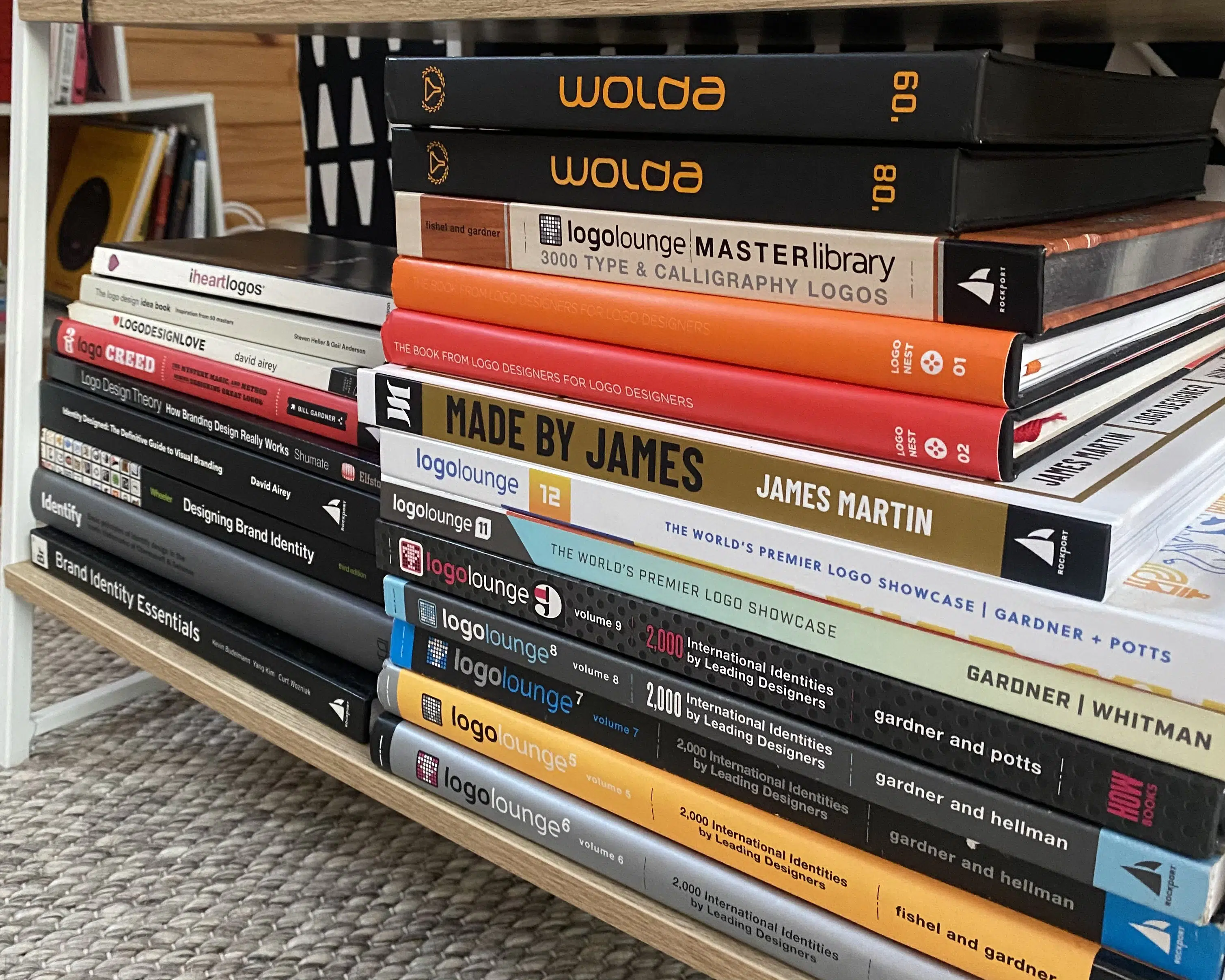
I’ve recommended some of the best graphic design books before here on Just Creative Design however I have not recommended logo design books before.

In the video below, I give an insight into 4 highly recommended logo design books along with a flip through of what you will find in each book. Read more »

19 comments thus far »
JCD Line Break

Guess The Logo Game

Published on Tuesday, June 9, 2009 – 12:00 am | 81 brilliant comments »

Gameshow

I recently watched a game show on TV and one of the mini games shown on the program was based around guessing logos. The host showed a small segment of a recognisable logo and the contestants had to guess what the logo was.

I was quite fascinated at how you could instantly recognise the logo by being shown only a small segment of it. I’ve tried to recreate the game here in this blog post. It just goes to show how crucial an effective & recognisable logo design is for your business - unlike like these bad logo designs.

There are 10 logos in total… please do leave your guesses / thoughts in the comments.

Logo 1.

guess-the-logo (3)

Logo 2.

guess-the-logo (5)

Logo 3.

guess-the-logo (1)

Logo 4.

guess-the-logo (7)

Logo 5.

guess-the-logo (16)

Logo 6.

guess-the-logo (15)

Logo 7.

guess-the-logo (13)

Logo 8.

guess-the-logo (9)

Logo 9.

guess-the-logo (11)

Logo 10.

guess-the-logo (19)

For those who need a helping hand, I’ve provided a big clue - a logo mashup of all the logos above. Only use it if you are truely stuck or want to check your answers. Click here for clue / answers (opens in new window).

81 comments thus far »
JCD Line Break

Fake Logo Designs: Revisited

Published on Monday, June 1, 2009 – 4:31 pm | 86 brilliant comments »

Fake Logo

It was about 5 months ago when I brought up the topic of ‘fake logo designs‘. Basically the point was that many logo designers are placing ‘fake’ logos, for made up companies, in their portfolio.

It isn’t the fact that the logo is ‘fake’ but rather the company and whether that these fictional designs are actually a measure of the designers skill and /or experience.

I would like to quote Steve from Logo Factory on his view of fake logo designs as his opinion is exactly where I stand.

All in all, the idea of creating pretend company logos isn’t terribly offensive - all designers at the beginning of their careers have to indulge - but does it give an accurate representation of a designer’s ability to deal with real-world client demands and actual company requirements? I’d say no. I guess at the end of the day, sites like Logopond and Logosauce are great for visual eye-candy, they’re not particularly helpful in seeing how designers attack real branding and logo development issues, nor how a designer can problem solve some of the more mundane and banal design problems that are presented in the ‘real’ world.

But how can a client decide on a logo designer based on their portfolio? I believe Briana had a great reply:

Personally, I think that using fake logos and other types of fake work is fine for demonstrating creativity and technical skill. And it’s only fair that they’re disclosed as such in a portfolio.

But if they are used in a portfolio then the designer better have something else that backs up their business and communication sense because that’s what fake work lacks – the real world give and take relationship with a client.

Adding onto Briana’s quote of “something else that backs up their business”, here are some other values one should keep in mind when hiring a designer.

In regards to disclosing fake logo designs in portfolios, I would have to commend Logopond (a logo inspiration gallery) for putting in place a new system for differentiating fun and client work - which comes after many others speaking up about this topic of fake logos. If you notice on each LogoPond members showcase page, there are now new icons that help you differentiate what is client work or not.

Below you can see what each icon means along with a screenshot of where you can find these icons.

LogoPond Icon System

Take note of the red circles, highlighting where you can find each icon.

LogoPond

Below you will find a screenshot of the upload screen of where the designer can choose the “logo status”. At present, it seems that it is not compulsory to choose what the status is, however, I believe it should be, to ensure that the system actually works. I’d like to know what you think?

Logo Options

I also believe that this system should be put into use across other inspiration galleries and I will be doing so from now on for all new submissions on my own logo inspiration gallery, Logo of the Day.

Logo of the Day & Fictional Logos

And whilst on the topic of LOTD, many people have expressed their opinion on whether or not myself and Jeff Fisher should showcase fictional logo designs on the LOTD site.

Take August West’s response to a conceptual logo:

Not a fan of the “working backwards” logos.

It’s too simple to base an idea for a company around a logo. I find it much more difficult to base a logo around a company’s particular needs. I could come up with random, cute logos for companies that don’t exist all day long. Just my humble opinion.

Although I agree with August on most parts, the main point of the LOTD inspiration gallery, is to give exposure & inspiration to other designers. For this reason, we do showcase a conceptual logo from time to time.

By doing so it gives exposure to the designers, thus bringing in potential clients for them. And it works too… we’ve received numerous “thank you” emails from designers, stating that they have received paying clients from their exposure. The site has also brought in many clients & traffic for myself and book sales for Jeff Fisher whilst giving inspiration to other designers… so it really is beneficial for all involved.

Coffee Logo

The most recent success story coming out from Logo of the Day was the recent sale of the Logo of the Month logo, Coffee Cup (as seen above) that was sold via the ’stock logo’ IncSpring website.

Below you can see the purchaser’s comment left on LOTD:

Well, I just saw this logo last night here and thought about it all night. I fell in love with it immediately. I have been searching for a logo for my coffeehouse for about two years now and just bought it from the link above today. I, and those I asked today, thought it was evocative, trendy, elegant, and fun! I’m so happy I ran across this site and saw that logo on a whim!

I congratulated them on their new purchase, in which they wittily replied:

Thanks a Latte :) and all hail the Internets!

So yeah, I am all for fake logos… as long as they are rightly identified as so.

86 comments thus far »
JCD Line Break

Identity Design Process for Butterfield Photography

Published on Thursday, April 30, 2009 – 10:30 am | 44 brilliant comments »

Butterfield Photography

I’ve recently finished designing the identity for ‘Butterfield Photography’, a photography duo based in Southern Arizona, USA. In this article I share with you a bit about the process & decisions made while working around the constraints of this particular project.

Butterfield Photography is run by Maria and Robert Butterfeild, who both focus on two different areas of photography - wedding / family photography and commerical / sport photography.

Below you can see the old and new Butterfield Photography logos.

Image

Design Constraints

Without going into too much detail, these were the constraints I had to work within.

  • The logo design had to be elegant & sophisticated yet not too feminine (ie. had to be usable for both weddings, commercial & sport photography)
  • The logo had to portray a natural, warm, friendly yet sophisticated style.
  • The logo had to be be usable across a broad range of businesses (ie. the logo still could be usable for a construction business) and could have no association with photography.
  • The logo had to work in one colour only as the logo had to be able to be used across a variety of applications such as clothing, vehicles, cameras, etc.

Brainstorming

Below you can see the very first stage of my very messy creative process - that of mindmapping and brainstorming. There were many more pages of these sketches however I thought it best to save your eyes.

Sketches

Design Decisions

Minimalism: To work around these constraints mentioned above I decided to go for a very minimalist approach to reflect both elegance and sophistication. This would allow for the identity to be versatile and reflect those values stated above. I used the typeface ‘Gill Sans Light‘ to support these values.

Colour: The particular orange colour used in the Butterfield identity is fresh & vibrant and evokes Maria and Robert’s style of photography… natural. The colour is not too bright, nor too dull which allows it to give off an aura of warmth and friendliness. Do you know your colour theory?

Concept: After many sketches, concepts and experimentations I came down to the concept of using a burst of lines radiating out from the initials BP. Although this is entirely up to the perspective of the viewer, one could see the mark as a sun, a flower, a camera flash, a face, a camera lens, a light, etc. but what ever way one sees it, in the end, the mark still communicates a feeling of warmth, radiance and friendliness.

Delivery

Pitching a minimalist design to a client is quite a hard task, so it is best to show the logo in context. This may mean you will have to mockup some examples of letterhead, websites, etc.

You can view the PDF file I sent to Maria & Robert when pitching this concept.

After sending through the first PDF, Robert replied:

“I really liked the logo from the first time I saw it, simple (which is exactly what I was looking for), easily reproduced for embossing, stamping, embroidering etc. You nailed it right out of the gate…. GREAT JOB!!!”

The hard work paid off and no more revisions were made. It is important to note that you should only pitch your best logo design concepts.

Below you can see the identity system in use.

Business Card

Image

Letterhead

Image

Website Mockup (used when presenting the logo)

Image

Mockup of fictional business (shows adaptability of logo)

Image

The logo was also applied to a racecar of which you can see some of the pictures below.

1st Attempt

Photography Logo

Butterfield Photography

Butterfield Photography

2nd Attempt

Butterfield Car

To be honest I was a bit disappointed to see the logo at such a small size and also to see the grey colour of ‘Butterfield’ changed to a dark orange (see second picture above) as the text loses contrast against the blue, however thankfully the owner of the racecar also agreed about this and they removed the stickers and reapplied them at a much larger size (see the last picture above) which I think looks much better. Maria also told me that the car came first place too which was great news!

The logo will also be appearing on a variety of other products of which I will upload when I get the pictures.

Testimonial

Below you can find the official testimonial from Maria Butterfield. You can read more of my client’s testimonials here.

Maria Butterfield

We hired Jacob to design our new business logo and were beyond pleased with his professionalism and creativity. He took our ideas and needs and transformed them into a logo that reflected all of our desires. We were particularly impressed with the thoroughness in the questions he asked us concerning our wants and needs. Jacob exceeded all of our expectations! We have no hesitation in recommending him to anyone looking for branding that will truly reflect who they are.

- Maria Butterfield

There has also been great feedback from the followers of Maria’s blog:

I’m loving your new look Maria! So clean and fresh. Looking good. :)

- Angela

I’m loving the new look! Very modern. :)

- Rachel

Very very nice - I love the new design!

- Cheryl

Comments from my readers are always appreciated too - thanks for reading!

44 comments thus far »
JCD Line Break

Logo Designer Blog Launchs + (Win Prizes!)

Published on Saturday, February 21, 2009 – 6:31 pm | 24 brilliant comments »

Image

Well only 3 months after launching Logo Of The Day, I now have another surprise for you… a new blog totally dedicated to logo & identity design. I introduce you to Logo Designer Blog! This blog is for logo design discussion, inspiration, tips and resources (and then some) which will be provided by myself and the many contributors to the site (we’ve already had 11 articles submitted). Please feel free to submit an article to the site.

On another note, you may have noticed the familiar pink, white and grey colour scheme? I have kept with these colours to cross brand all three of my sites (Just Creative Design, Logo Of The Day & now Logo Designer Blog). You may have also noticed the dot as the logo, quite similar to the Logo Of The Day logo. In short, I have gone with this simple approach because the circle is a very common design element found in many logos which in turn, reflects the blog quite well. It was quite a challenge though… how would you design a logo for a logo design blog?

So what type of articles can you expect on Logo Designer Blog? Here are a few already on offer:

I would also like to thank those who have already submitted articles (which are or will be appearing soon); Alex Charchar (RetinArt), Anthony Zinni (Positive Space), Chad Mueller (Inspiredology), Chris Spooner (Spoon Graphics), Graham Smith (ImJustCreative), Lauren Marie (Creative Curio), Liam McKay (WeFunction) & Selene Bowlby (iDesign Studios).

Please do feel free to submit an article yourself.

Promote the new site & win!

To entice you to promote the site, there are a few prizes on offer! Each task you do will get you one entry into each prize draw (ie. 6 prizes = 6 draws). You don’t have to do all tasks but the more you do, the more chance you have of winning a prize! Winners will be announced in a new post next week.

Task 1 - Win $50 & Art

Write a blog post about the new site (preferably) or mention the new site launch in a blog post. Ensure you leave a trackback so I can track your post.
Win:
USD$50 credit at Think Geek, courtesy of the kind OfficeHax AND an awesome piece of artwork (11″x14″) done by the talented Darlene Lee, be sure to check out her work! Very inspiring! Darlene is also on LinkedIn.

Task 2 - Win 1000 Business Cards

Leave two comments on the new site, on two different articles.
Win: 1000 business cards courtesy of the kind Jeremey Duboys from AllBusinessCards, a quality online print shop!

Task 3 - Win a Designer T-Shirt

Add a logo to the Logo Designer Blog Flickr pool.
Win:
Any shirt from DesignByHumans. Postage not included.

Task 4 - Win $60 worth of Advertising

Stumble Review The Site
Win:
One free month advertising (125×125) on the new blog.

Task 5 - Win a Caricature Drawing

Twitter about the new blog - Ensure you put ‘#LDB’ in the twitter message so I can track it. (without the quotes, but with the hash)
Win:
A caricature drawing of your wishing, courtesy of Ben Capozzi who is a very talented political cartoonist!

Task 6 - Win a CMYK Clay Pack

Suggest an article that you would like to see on Logo Designer Blog - leave the comment on this page.
Win:
A CMYK clay pack from the kind Michel of BlackEye. Looks like fun!

Also any feedback, advice, suggestions or ideas for the site would be appreciated. Thank you and good luck!

24 comments thus far »
JCD Line Break

The Logo Design Process From Start To Finish

Published on Wednesday, February 4, 2009 – 12:00 am | 84 brilliant comments »

In this article I will guide you through the process of creating the identity & logo design for one of my recent clients, UKE, offering insights into not only the thought process behind creating the logo but also the creation of the logo itself.

Also keep an eye out in the May edition of Layers magazine for a feature on the UKE web site design.

uke

The Logo Design Process

When one creates a logo, they should follow a logo design process to ensure that the final design suits the needs of the clients (not their wants)… I have written about the logo design process of professional logo designers in full here however below is the usual logo design process in short:

  1. Design Brief: Conduct a questionnaire or interview with the client to get the design brief.
  2. Research: Conduct research focused on the industry itself, on its history, and on its competitors.
  3. Reference: Conduct research into logo designs that have been successful and current styles and trends that may be related to the design brief.
  4. Sketching & Conceptualising: Develop the logo design concept(s) around the brief and research.
  5. Reflection: Take breaks throughout the design process. This lets your ideas mature and helps you get renewed enthusiasm. Receive feedback.
  6. Positioning: Position yourself as a contractor or build a long lasting relationship. ie. Client tells you what to do OR you guide the client to the best solution. The latter is usually best however personally, I try to find a happy medium.
  7. Presentation: Choose to present only a select few logos to the client or a whole collection. Presenting only the best is recommended.
  8. Celebration: Drink beer, eat chocolate, sleep, start on next logo design. Or a combination.

Getting The Job

Eugene, the business owner of UKE, contacted me earlier this year (who found me through my blog) and she wanted to rebrand & make over their old business identity starting with their logo and then the website.

After a few initial emails clarifying Eugene’s needs, I sent Eugene a four page logo design questionnaire form (PDF) which was promptly filled out. I then sent a proposal & an agreement (never call it a contract) and then received a 50% deposit via PayPal.

I also sent her a web design questionnaire for the website design but that is for another article.

The Design Brief

After Eugene had filled out the questionnaire I had most of the information that I needed to start on the logo design. There were a few other emails clarifying things but basically all the information was there.

Here is a bit of background information on UKE Chocolate Gift Baskets:

UKE.COM or UKE for short sells unique arrangements of chocolate as an alternative to gift baskets. UKE targets a more upscale market due to the time to make and cost of the product.

After reading through Eugene’s completed logo questionnaire, I found in short that she wanted a logo that portrayed her whole business model and she needed it be: “strong, bold & luxurious” She also requested to have it black or gold however was open to colour choices. Eugene also wanted to have a lion in the logo. The logo also had to be suitable for the web, business cards & t-shirts.

This was the old logo that was to re branded.

old-logo

Research

Upon receiving the initial 50% deposit for the logo and signed contract agreement, I then started researching what was needed for the project. This included looking up Eugene’s competitors (that she provided & my findings), researching the industry and searching for other logos in the industry, among other things.

Research is a critical stage in the logo design process as this ensures that your logo will differ from the competitors and it also sets a benchmark.

Sketching & Development

The next stage of the project was developing the logo. Developing the logo design concept is where creativity comes into play. Based on the design brief and research conducted, this is where I let my ideas run wild. I brainstormed and sketched down my ideas and then experimented with them on the computer. I also had breaks between these sessions so I could reflect on the designs and have a fresh perspective on the job at hand which is a crucial part of the process when when designing a logo.

The challenge that I had when creating the UKE logo was trying to incorporate a lion into the logo while still making it look luxurious… I got around this problem by brainstorming and word association. My thought process went something like this: Lion > King Of The Jungle > King > Crown > UKE with Crown

Below you will find one of the original pages of sketches that I did for the Ultimate Potential logo… I know I am no Picasso but it is the end result that matters. Find in the bottom right corner where I originally got the idea for the final logo. Remember that there is no such thing as a bad idea, just bad decisions.

uke-sketches

Computer Generation

As you can see in the sketch above I had the idea of using a crown or lion placed on top of the word UKE. After I had this general idea in my head I experimented with the concept in Adobe Illustrator and researched different types of crowns, layouts, fonts, icons, etc.

Typeface

The first thing I did when experimenting with the logo design was to find the best typeface for the logo. Below you can see just some, of many, different typefaces I tried and circled in red, the typeface chosen (Friz Quadrata, Medium).

This typeface was chosen for its luxurious, traditional looking nature. A great alternative to the much overused Trajan.

typeface

Concept Development

After I had found the right typeface (though it is never set in stone) I then experimented with different concepts and layouts of which you can see some below.

Please take note that no colour has been added to any of the designs. This is to ensure the design works in one colour only. This helps on printing costs and makes the logo more adaptable for use over a variety of media.

One should also remember that simplicity in logo design is the key. The simpler a logo is, the more memorable and adaptable it is. In nearly all cases, less is more.

You may interested to know some more ‘rules’ of how to design a logo.

experiments

Colour

I then experimented with colour. The final dark purple colour was chosen for its royal & luxurious nature… purple is the colour of royalty after all. Do you know your colour theory?

In the image below you can see the logos from the above image with the same purple background.

illustrator

Delivery

Obviously, I ended up choosing the second bottom left logo (circled) for the final concept… After some more experiments & fine tuning I was finally ready to present the logo to Eugene.

Below you can read the email that I wrote to Eugene when ’selling’ the logo to her.

Hello Eugene,

I have been finishing off your logo today and have come down to the strongest concept, of which you will find attached in a PDF.

After all the research I carried out and concepts that I experimented with I kept coming back to this simple & effective logo… one without any animal figure. Not only this but I also found that animal figures were way overused, especially the lion due to it’s heraldic nature.

Your new UKE logo relates back to being king (much alike a lion) which is achieved by the use of a simple geometric crown. The crown has many symbolic references… the crown is a symbol of power, legitimacy, strength, righteousness, victory, triumph, resurrection, honour and glory of which can relate back to your luxurious packages, that of the highest quality. The typeface used for UKE is also one of power… strong bold serifed characters form a strong brand name that leaves a lasting impression on anyone that comes across it.

The purple, black and white colour scheme was also chosen for its luxurious nature and this can be applied across all of your marketing material such as your website, business card and so fourth. The UKE logo not only works well on a dark background but also a light background of which the white logo can turn into a dark purple logo. The logo can also be reproduced at any size and maintain readability.

I am eagerly awaiting your feedback and I will hear from you soon.

Regards,
Jacob Cass
http://justcreativedesign.com

Approval

uke

Eugene promptly replied:

The logo really works! I like how clean and modern it looks. I think you might be right about the overdoing of the lion stuff even though I had an obsession with it, none the less this one grows on me more each time I look at it!

Don’t you love it when the client loves the design first time around? No revisions! How about that?

After approval of the logo design and the remaining 50% payment I sent Eugene the final files in EPS, JPG, PNG and TIFF formats.

The Logo In Use

When Eugene first contacted me she also wanted her website to be redesigned. Below you can see the redesign of her old website with the new logo in use. The website is currently still in development however should be online soon.

You can see larger before & after shots of the website here: Before | After

website-redesign

Comments are welcome as always. If you are interested in more articles outlining my design process fly over to my featured articles page.

NB: This article was originally written for Creative Pool’s January 2009 newsletter however I have got permission to republish it here. Creative Pool.co.uk is UK’s largest creative recruitment & directory resource.

84 comments thus far »
JCD Line Break

Copyright Issues In Logo Design

Published on Wednesday, January 14, 2009 – 12:00 am | 25 brilliant comments »

Copyright Symbol

Copyright is an issue that doesn’t come up very often in blog articles, especially in logo design so I thought I would bring this topic up to see if we could learn something from it, myself included.

I should mention that this article starts off a bit technical, but bear with it… clarifications come further in the article.

What Is Copyright?

AIGA, the professional association for design, defines copyright as:

“The exclusive right to control reproduction and commercial exploitation of your creative work. Copyright protects any kind of artwork, including illustrations, photographs and graphic design. Except under certain circumstances (see “work made for hire” section), you own the copyright in your work at the moment you create it in a “fixed form of expression.” A fixed form of expression is any tangible medium that can be perceived by humans, including traditional forms—such as paintings, sculptures, writings—and new forms that require a machine to perceive (e.g., GIF files, CDs, websites).

Source: AIGA Copyright Basics For Graphic Designers

I am not going to go into the basics of copyright here, as you can read about that in the link above but I would like to bring up some areas worthy of discussion…

Copyright Laws In Logo Design

Based on the definition given by AIGA above, you own the copyright of your own design once “you create it in a “fixed” form of expression” but the question is where can you draw this line?

For example, say I am going to design a logotype (ie. a logo that is made out of a typeface only)… this means I will have to use a typeface designed by another designer. Assuming I have paid for the license of that particular typeface, does this give me exclusive rights to change / alter the typeface and then resell it onto a client?

The closest answer I came across was found in this article titled Can We Use Fonts In Logo Design? by Mark Moulton, of the Graphic Artists Guild.

It is true that the USA Copyright Office does not copyright typeface design. However, that does not mean that typeface does not have some restrictions. Specifically in the Copyright Ruling of 1988 it says regarding typefaces: “Useful articles are not protected except to the extent the articles contain artistic features capable of existing separately and independently of the overall utilitarian shape. Variations of typographic ornamentation [or] “mere lettering” are not copyrightable.”

Scales

Turning that legal jumble into English, it is to my understanding (correct me if I am wrong) that we CAN NOT edit a font and sell it to a client as “mere lettering” of the font. ie. Since our logo will be using characters out of a copyrighted typeface (scalable fonts are copyrightable) it is classified as “mere lettering” and it is “independent of the overall utilitarian shape” which means that it exists separately from the typeface itself, therefore making it illegal to sell on as a derivative of the typeface.

So what can we do? Moulton continues on in the article:

“Ask first [the type foundry], get permission [to use the typeface]. Most type foundries have user agreements printed with the disks they supply or posted online at their websites. All user agreements are not alike. Read through them and see if permission is already granted. If the foundry does not hold all the licensing to the typeface then they should be able to provide you with the name of the artist who created it.”

So to clarify, to use any part of a scalable typeface in a logo design that we want to resell onto a client, we must first read the user agreement and / or check with foundry to confirm whether we may use the typeface in the logo design.

Moulton confirms this in his replies saying that:

It’s typically permissible to use typefaces in brochures, books, magazines, and other enlightening, and informative works because the typeface is being used as typeface. But speciality uses (such as logo design) are going to require that you do a little homework. Be sure to read that user agreement which comes with your font.

Scales

Font Licensing / Design Patents / Trademarks

On this topic of font licensing one should also know that:

“When a font is ‘purchased’ the user never really owns the font - they typically receive a license to use that font on only one computer. These End User License Agreements (EULAs) differ between companies but generally state quite clearly that the fonts may only be used on machines for which there is a valid license.”

Based on this fact, this means that you can not send clients any fonts unless the user agreement specifically allows it. Fonts must be purchased separately per user otherwise it is a violation of the end-user license agreement between the logo designer and the typeface designer.

This leaves me to one question that I could not find the answer to… Does this mean the client will have to pay for another license of the font to be able to use the logo design or do they only have to purchase another license if they want to use the whole typeface? I would presume the latter but I could be wrong.

You Can Still Legally Copy A Font

While researching I also came across something that really caught my eye… According to the SIL:

“If a type designer wants to ‘copy’ a font in a manner legal in the USA, they would now be required to print out every glyph at large size on a printer, then scan the image and import it into the font design program. They could then manually or automatically trace the image. This seems to be perfectly legal under current understandings of US copyright law, but may not be morally acceptable.”

So in the end if worse comes to worst (and I mean worst), you could still technically ‘copy’ a font.

So, what do you know about copyright in logo design? Please share your knowledge in the comments below.

Further Copyright Resources

Copyright Resources

Font Copyright / Licensing

General Copyright Resources

25 comments thus far »
JCD Line Break